

' d='M19.579 11.47h6.551V18h-6.551z'/%3e%3cdefs%3e%3cpattern id='a' patternContentUnits='objectBoundingBox' width='1' height='1'%3e%3cuse xlink:href='%23b' transform='scale(.00794)'/%3e%3c/pattern%3e%3cimage id='b' width='126' height='126' xlink:href='data:image/png%3bbase64%2ciVBORw0KGgoAAAANSUhEUgAAAH4AAAB%2bCAYAAADiI6WIAAAABHNCSVQICAgIfAhkiAAAIABJREFUeJztnUuvJclRx/%2bRdW73TM%2bAMMIz0G3MY9FjJDYs%2bAawQEggr0AgQCABAmOQLRsLS/OABUIIiTXfAL4AOyQEQkI8zcM8FsD4ARIaHkN7euY%2bzqlgkRGRkZGZderce%2b7te22n1H3rVFU%2bqn75j4jMylOHmJnx1fQVlzbPugHHTK89fggCQCCAgASAwjkp7InHvQpmMEAAc97/%2bj//%2b9Hb/KwS3WXFv/b4IRIIJJAB2Oe8XcCSbJHf17lypnZ7BkPv0ozcCWYwXv2nu9sR7hT4V195iMQZ4mRwKQOmomb7rFdGAHFGT9QHbsmDR73NDDBxhs/ATLkDzAzs7lhHuBPgX3/8sII9CWxVNwGYgApwApAcRO0gPtHwQwZNblvTjAweDOyQLcBMjHnOHWHLjE//0xcvf7FHSN/6zR/Ye86tBf/qKw8xcVGzh50IZt4TkxzPKcP1%2bSB7yB0vKQXg%2bdySmIDZ3aE5783AWc1%2b7hA7zp1gx8COGNsZz6wT7IN/68Cr356oqDQBmIhADKSUYauie6DJqVv3k6GX/VQD9r4fqFWunxVy/pz9/k4%2bzyQmn4Et5R6xBbAFY8uMT/3jzXaAOwP%2btccPMVEGFtVtMGW7NfNFzROARM7X6z/x7dlalEAPKLEABfXrjakCPlZ/z9nHm6%2bXfdB9jK34/h0DF8ifP/mPXzjaPVtKtx68mvTJm3MiTJw/EwEbF8hNiKa/BHa5g5TjBl3%2bqVm3z3ARvh2r6bPgn%2bud2FFrBXZcYoAtckfYIvv9HVT9uRN84h%2buvwMswX9m4DVC3xAZNA88JVV3MeMbgbJBDVsBTlQHdsQlFtDxvVkJUal2hola895LGtjlvwwwYabcPWbZr0HfTkBbJxA3cMGMcwDnzPjkNXaAWwf%2b9ccPi5pBmASgV7j598oSlG1Vt7oH9dmJYVbDAkCReAIwifNP8lc7iqZo7ssBoLpT3r9DAj0GZpYIH2oB8nkXyKq/4GwBLohxMecO8Euf/fwV7uZyGsG/UfDRrE/I4FTZI%2bCTU7fmUdUmhpn/JJ0ABLMYRPm8SYM5Kh0hu4V8%2bcXUI2zUiRDG9%2byie85mZMfAVvzAloF5LtDV5J9z/nuG3AFOwfjYZ4%2bv/mcOXlVuoNWsU%2b4IG/hgrg9849SdWI8L8JQ/QyyGqn2SbUpsZt7%2b6k2IkKmc43YBkEBP7phO6iBb/Gz5dYZPOsRuJuxmifB3wDxnF3BBwAUzTsUCnMm/j1yD%2bnvwbwT8G48fNSrfcO3HJzH7EfgJuSEdStROotwNAZQcbPm7IQDEmFId2eerdsM5%2b8vVMZRTh6ma2NFIj8k6hFqCnczz7mbCVizC2TYDP3cd4JwZpzPjZz/7uSvc7TbdOHhv2itfToQTZ9Y3qnLfOVAUXkw8kFI%2bL1H215ODbSY9sQWEQDlO0hkq8HojUoalpl/9/sjn%2b5smw3YAYu71OLsOwFn5agnOd4TtDriYgYuZcYbSAd7jGe8x4yN/fxz13yh4HZdvvMpR%2b3Kv8o24gA2c3ydgoyadyGBvUgGdEpBE2QZbwCYB7X06xE0w5Xxq1jVVM3kU/vrEPh5gUzoEbKIy48dz7hA8qwWQTjAD2xm4mAnnO%2bB8B5wim/z3mPEuM37m746j/gj/WsB7f24gRc0nKPAnlBm6ExTgkwBPRAZUgU9i2jN0tg6SZMxmsMXEQyAoaO0Y3uyXwK6Y%2b6W0FAD6XV71PJO5A54pjwgY2O2y%2bd/OwPmWcLoDznaMUwKezoz35hk/dQT41w5eoW80aCPCxMW0R5VvUMz6RJCAL0PfiO%2beHPCNmPLKp6dsotWkg/O%2bqGiSc2M6BvAV2QGU4I93udZ5B2zFDWy3%2be/pFnh3SzifGU%2bJ8e7M%2bLG/eXNF6cvJwz8q%2bNcfPxSAYuIJ2HBr2tUKbFBMvKpc/fiGgGkSv90DnkTdicsYHqJsieCBMnTrq/PmgANtvKCjAN5RfrAzA/NMuNgSLnbA2ZbwdMt4l4EnPONHP/Pmypr66VrAL0HfSOB2opYAKNBF5bqd1KQ7tacBcB2%2bEcSM66RMMOUx3TRwbdNSYucStrscB5xvCedb4J1zwjvM%2bNKO8UOf%2bbcDaq3T0cFH6N6Pb5w/P6E6Yt%2boyiVSPxHom6R%2bOwNPyfnxCNyru5qCa9t5G4GX88rkwMyUx/s7wvkuW4CnZ8A7F8CXmPHhv746/CuD3wf9hPqmPW87X%2b5UnoM4CdDE5JP7/GUJvFPBPOcOsN1m9Z9eEJ6cAm8z4wf/8nLwjwL%2bNYG%2bWQndK/5EIvaTlMGdUInck0BOYuY1Qqfov79MgfvPRMAsQd/5BeH8IuH/3gP%2bdwa%2b/y/%2b9YCWlfSt3/yBZkHK6vTqK2Wcrj5doZ8MoOcOAdwTs36SgM0E3EvAyQScJMaUGGnK%2b9NUZt6mxJgmLn7eZljQ3DgCZ%2biDoK6cV8b2o6HZIYHbGuhEPIbuKvTlpQ3j/r0ZD%2b7PeOH5Ge97kfHSCfD73/3tK1vXpksvr54ccA3k7hn8Av0ExZ%2bfIPtzNesnovQ0OV/uVS6PVadUZtuWJlXujMJjJUHhPiW5JiYgnTDubWZME2EzEU5OL63by5n6N155ZOY6m/i%2beW%2bgO39%2bL7mIPZUpWJq4LKpMLGP0uxell/M6t7dzLb3yPHTZYXnmLeH8POHpe4Tv/MPD/f3B4H0wd09UfzKCnsTMo0C/7wK5SSCT%2bnZ9guZV7k16bPxXEvBePgYuThOeniZ86A8Og38Q%2bFdfeWhjcVW5wvdDtg3BOoFCvzdls75JOUrfTGxTsSllc68R%2bzTJg5IB9FsNvJrEDxXtAQ4E6D3g4TMA7C4IX3pnOgj%2bQT7%2bBCWY2yD7dXt4opMzI%2bh%2byCZKj1H7JJMwo9m2rwLv553uz/jazWEee7Xi33j8qETmovgTZOD3Unl2foJs9u%2bRQJeIfQTdnqq5iP3OAY%2bF94AvNCCBa%2bDu3KV88rWiqqqXf2/dMu5V4F97/DBDdcO3E%2b0AVKZiNwzcT1T79D3Q/dg8TXW9X/HAR3k7wP15L//ufvirTH1e0Ej2oMWmXKHz8EXx9uxdlG4PWQbQLXJ3F38ngPsKRsAHjVDgHEdjtAL4wnnccY%2bjtHcg%2bPrjh7YcSp%2bpb6Dr2ciesZ/YY1jYvPtEeSJmkkCugT7V0G/1xIu2zVfgK6L60LBt1Fe5Bra%2bLEuJTeV2nivfOpEc%2b88ffbT3evYqfpKh2yTP1fVZuc3akVO/dI57k0zQTDLjhhzJG3QHn9J6hdspt0XhbrsqbgAcQCM16pRlKfHe8zi5XbpiuK2%2bSYuKf/2VR/a1Jb8EygI7gltIIU/iUp6Dz//YTH0PekrrFK4XQzeo8FxugB4rorCr15DEXejNpBTVeRT66DxO%2bV%2b%2bLwwQgwBbjPLWjy%2brflHx%2biWH/EUH9em6nk2na8u3X3QaNj9hK5MzaXJP2pKumukMfzppyeddh8JzuftV3hTXAy5LrSLwpTzVoU7d6sfLfeFymnche653qPjXX3lUvsRIeUyuJt4eq4LcUqni11XxSWbnyuNVWS0z7Ye%2b5CuvU%2bH7VE4ReketRAI9we7wosIlnx3y9QY/Xnx8UTkRQP67ZHLOf/3EWPVDxWs5GwngVOEJcJM2pQOUadgyFWsdANnsG/SF9MwVrhXFzhbLW1I4UAEf5pF81aFQt07blk4TOkgMEjtV9FJX8ap2r/iEsprGhnEQUy8m3vw68phc17dPOju3AP1WKByoHoQMy2s6BZfXq4jK9yocyJ0F7rpd3Uz5n5UjCgfEVaoyJW%2b0RJwYnBhv/eTD7rV3Fa/fM0uyxNleVEBlOKcBXSLGZqICXVVO2gF0yNaHvqTwhd3teVdRONCVwBrgsYy9CgcMuJ3TUXhiHaKVOlJUeKeNnDquqpO64Ak6ZoeN2VXhZurlnJOJGrPuI/jSY9s66o3B8T3pRoCHBi0CnwGEGcj6XAfd1R2BR4ApnL8a%2bOD%2bNJf9xoce5QidqXyJMaqddH0c2SPVjSyMzON1lAg%2bqH3JpC/s7qYrmfSeenplugYlcAOdJskzy3kj6ImzEIAq6FOTnmTRCU/FpEPuexoFiSgmvWqrjwsIeOunW3PfKF6/maL3RadqvdrzuJ6QJuA%2big9PTuX2bL0XvHTSdQRuXYWPrM%2bCWbcpVn9YAc%2bAfcGvl/aYdWXGU0fhQAEehoWNwt1fks5kYUdnbUADPgPXSL4EdjqOt6EbyULJqYzNk47dSaHfMuChwm7bAnCgfgfOauBwlm4AnLgFDtRm3YDLsYOBrzH1b3zoUVY3d4ZtrB0iq50m/cIDO/DFxGuAdyyTfvB8eqzIm0DdjL7QmXRTeYSuL7yZMLwAErMe69VqzI93VK7QLYjvqTy0W4d1FicQI/kJsgT89899U9XGSvH2BUQq4/jElL/ShBLJ28MYN6Ggpn3feP3GFe621yocGABXlS9Zr4HKdTNG6osqtzx9lRPZV/LzLrG27oIsC4c2V%2bBJgwk52771wkCSxRbElJdOebXrGF4b1Bm63Qrg/sMa4Lp9BeCVH%2b9A9768mgvAADiyCz0EOKO9p1bvGx96JC8OzP/8sipvAewrTmrW4QI5nZ71w47x/WrSUUy6267qjsdRTDqAyqxX7VD7O3JX7pHpXrMeo3UpnwjNFG8POslxP19Pk7sXOnkkeapZv8T4n49%2boxW58WUTlXhFtxU%2bAbaQgiATNwI7B3xcHr7079MwHU3h8rkprgPcp2ZaNJ/UL193eYWH84ZmHSgvXlCFrzDrVdCm1zcxSF%2blPYV6A/DedRh4e9UISm/Uz/5lgvpVp%2bRUbxE8uQtbkW4eOICOWe8C79TRBe62K%2bAAmlk33U1ogOd8NfQRcMyUoQ%2bAAygx1uAeF8UT5Tc/E1lAl6dsxcSTTNiQPHJVU99R%2b750VOCj8pzZHQHv%2bdVeHUcFHuvCHuCaT%2buakeGHplgn7gwPddPfp40/oua8NNhP3lAZs6fi39Qt6MTNUrp1wKPq1gKXzw1wAM3TM81KaIDnvKX8XpReOhdbGcRl/xqznvwx3QcAv/odj8KrQd08fSrRvb53RpU%2bSYFq8kfpaEHbUnl6Y9VdAUAM3DT4CYGU5fdVulUwUeU6hNVVMHl/Dt4IKG/ZkrbazXXJT7WStLsK2nyATAxMpUwPXYPqKsCUlAhIU30db3/8ZQCieJtnIYTp2TK212gxv8WKbTGFPnnrgb1phQMDlfvxcTmpqcc2R8Ddx6hyPVbBWVI4CtzKh3vgMpNm1ikCHw33rKzOcSl/YycqdCpnqgVIkOXSAlnfUDH5Fw75%2b/DMgANe5XqgC9zV1QAP7agfivj8YdmT/t0HXNreBc65HWYtesB9W9cCD/drk%2bvMvlwrshcDI39JQk27f8yqX2H2ZvfGgLu/S8CBZZUfA7ietyZwq4C7z1DA/jF2aIuNzwfDveG1BOC6vfEZ1bxr%2b5Mcy369TOaQvmiI5CasBJ7r7fjweM5BwAHoN1LcgSWV7wUePnvofoaMKP9IgZ9uLXkCcHSCNlN0dps6Y1q1x5cbVK7t7HaITuch99CmnrKV/f41oXk8737piVDeJinba9IalS8Cl%2b0hcGCvyqvie8oJ9a0BPh0CPLZJ2tEDrma919YKuD%2b%2bAnjt43W8HoDrjJ1O0Ch8m7BJHNk16S4CBwp04pKnAh7q6QL39UcoxCW721/5cd9evy%2bqfGDOK%2bChvWbqm4wkFkAmbSyQS2XI0lRYFXEE4FqPS9xZ9gSgDNFcOUPg/vg%2b4FSA2%2bzoZYC7IM2gB%2bC%2bjFVmfQQ8Xm/V3vy3mqvPrwOvV9wA8p4aqSRbBRd1hvRMgLvPDXBgaCpj4moEUGKXmdx6iwXoFXA9V4F7lR8KXMsdPR84ALgeduApnFveFq3AdfWtWoi6s10iUo8qRQu8MevSyIOBu3Y3NQSVe%2bCJZIZ0D3D21xaBS%2bEG/VjA/XUvmHUPXRd/bKpzpLHlJ79gY/nKbFHxH1cC7va1FmQBuIceb5Sd2w6jYmqAy%2bcZOWidIjwU6F3gvRs/AG7tWgCOxKC5UZj9PQQ4iPPCUDlWP5ZNVbnmy8uL/rn8dlvqQD8ScABN8HZM4IAz6x3guh6up/LEwJycy65UHa5Nx/s6Q%2bdVnjibFMlXNXMS4LIdL5TEbVT7m9GF7uayTtAl93QOAKP/Wm%2b9AJIxPUJD1wBX8xGylPM6wF27LIVHkVVSNTIwWgSpwG0uAocBnz28ka8dAAeQp7od1C7wmQrwqlwcBjwed5VJVE/VseI2y6QNSHy8mvlQkOW/JHCgYwZ9uiJwzWwuisqKKv2NulyWa35iE%2bacrIgqrvB/ibiYfqqvyYAL1J5waATcXeMIeG7vHuARvKbeXIyO2ydVnoBsvljQA%2b5uADXnDoDHk9cC98OQ5iLcuVS%2b%2b1D9Lk0HOGMPcNkmiUf8dGsTvC0B12uJHUn/80IbAAeACdwe95bJucENAHA1yJRzCLIQ3%2b1Pxd8jXlgu6HjAxY9fBThRHYEzlXs3mltX1c7k6h%2bopwfc6tHONlM1UqjKANr3BBBWAwcy9MmvufN1VPezPqdSfKuEMlVbfSMEaIH7CwrAInAgTGP6jRXArcx4ce4YJ7YamdzohKQlHeA6SVPf/NA%2baOcg%2bZ2bcqyZdQPGK2JGwMN1Lqk8LxbFauBeXKJ4ORZvouvJxkVm8OAzDoADrUtYBI7QoWLj/fE1wFE6MWndKd5vtii9C9zVVQNvh1Ee3EjhJqCqI7XXuQo43Dk9EfiFHqHOTWyXr5jCZ32/bBnADs5FCxwoprZqxKHAOw22MbWc3wPOS8C1/NipInBks13Nvnk4Ehg0nZNR/HsP%2bEqzrtPl5OvtCWEBeFfxM9rhFAi1wmUyoOvj7XOr8qpDuotr5thj468CHABP8bpXAJdt4txhesDVrDOLOedOWR64y1tZlZXALd8ScKCal%2bieF8HPIuEKmQPuZ5%2bAdcC1jEXgI/O0BricvxY4gyxKz9OXnToEOIjBRGa2qzhXp2RTef1JpS69DUHljRvpPC6N12mLPhbUqxe0BngFXtfla2K/4SN1qb9eCNjkGjfQZsvCcWk40LEAwTSuAV5fpwfOBpxj%2bQpXVA4S0%2brjmCQKh6iQ0Z3wiiq/LHBg2VxD7sMi8Fi3r/bTn/1idTJ1MljjxVeWIYyhaCshl0dvbLzQxKYc8uYuWhcqtbCo0I/DmZBXolrWfPacyricyKk8XJuZ9SkvJLVJHUL99Sqb3kN7wwlV8Gb3yHd0jZM6w1A7X2YV2w7jtgHQhuuOQZ3zg8he/PR/AXDDuRn5R%2b9VHV71jdldMOvV3yU/HhXe6dHV820IwKhw7z5QAzeFpzLJUZVv5aIyqR64tkPH7EAHuFyPAS%2bNaa7X3xcrwlkCTkDqvV0jAG/2NxY01BE%2bG3jVrY5lvSlk799iR%2bhV7oHHRnjg8dgIOKF6RmDAJb9ZRo2%2b0xWAy35bTIryNowRcP3YDRRXArcygDHwxGh8/T7goLoNkpziGTMoB3ky48FKnGRyp%2bMrqp69BBwowVDvGKELHFRUHoFLkdBAjBOQxAk3b3L2bsEDl7LU1JfVw/XrT7q%2bNpj16vjC49Lagjq3MRDUKuDRDRhwDZbrDLWph0b4WeVs8GPZ3FS0z6w3j1VdoQcBl/yHANc/9vxde58C9yZdjq02640bPBC4ntNrs59mJXfQz5F0xOhVHoE3zfrU339RVA/swJiJpTN0llq4yliClCY4s4ttX/5n7U81dHsDVCq/RMXuRiDlPElgzUnKJ2fSvSKo3Fi2c9naQe78PDlSXn9SvUO/smru/T6%2bLg36emKoLAKbtaGE9pUqhPIqleo4lY5lddZ5CSTfoe9AT8CDT71lH5u5emU0y81llmGL%2bfmiCJ2X7rmA3rvg7MLcuV7NyT9Q0YuTvHrNTMA8sd3nLnD5YxDBTVl6DcmZfAVeX4jmKz%2bW1KhzAXg5LwduNI/NevWVqMkfcOayY%2boXzfpgUqgCv6Ps63cgWysAENj5uxmUfzQomjk9eyVwwC9qWHp6tQe4nn8gcAD2GjBTeHUhmi%2bXkfw%2bqzPA6AFHOS/pfx2FW/LAXd54nfljDTzXrReHxVQd/sTffgFbuAgfwI4YM2cLkCP68iiyujaEl/%2bpWVfLEFQ%2bUy7L/1ZsDBRthcyUy24idSr/VIlm0hW6M%2bvmSoiR5DowYTgeh4znK%2bjRrPv2xvsiZp31WiK4iQt0/UqyXZCa2fo688fapAMZ%2bAg6E/Dgk29V%2b5r33M0MzMTYEbAlYMeEmcuN0%2bsp9ymYOa3Y1OwaAHUR3FeQblYBUYkReio3oHDWRoGjPp5QAsBG4ZavlNG0Ma6CkWsdKTw/SWvdQ/WotntC36wvKlzLcql57uJSA35LjAsQdgzsAGfiXX0JJeSLvs2ZXH9sdsDtmXg4R9/mlC/I%2bftLANePeWR6JOB%2b/wg4k1v3FsrxZj1G6pq/l6cDHKC6fnfdHPK3F9zxBB//my/k6J6zz98CmGWsx8jDPNKZJe/bJhgQH%2bzNpDNubIsWInRyLUnEfegC1aZvzaI4U%2blUDu1oYmq7gRuQ17ipHx%2bZdX8DE8r7a%2b06isJZf3gplGNm3bnA2n4H10FivoNJz8AddDdS8lPLJgICXvh4beaBwdurL8A4J8ZzQnLLwJxDfBD0sQcWFc6cb6rMlcjjTdco%2baP7c4cZqFx9NAbAq9si7sGVMQTuMjXAY1AlQSYicGmQflGhAa5Aq9FHMOsrFZ6vWz4eqPCYurHf1/zSr4EZ2IKxFfXnuXzXFA3cwrXkiR950CE3KgZj2ml0cYRXeRW8uQDPXhPC7mY66L4cX0Z3eObWqlcqt39O5foKkgqe66ATmy/35VSvNbV8gUpYfjVSuJr1CH2k8JKTWndklzD4pcnf%2ba4P4sUp4WuJ8CIRvuYEePE5xvP3Z9x7bsbmXu2PbHZXZulGU6b%2b57J8YBj9eIwD8oxguJFWDkw53Rk3uzEDldvNa4dV3RsXgjffkN5XkptCwtw5ETX7rJDkmuVFEE6LwDXTg4%2b1Zh5Y%2bE2ac2ZcMOOCCLsE7Li8vxc7As/5GxoGfBLg6EBEberTCuCsnxn5P2cF4DcDcADt8KwH3JfVA851Xf68JnhT4Fafnr8HOEisT2vSDbiDvh54V8t1U0YHPvqZL%2bAcnP09cwY/A/NMZXpVKvYTIbXpgpn0XBmXCDuMx6tn7upCJE6wm%2blueKISlHmVN9OsPeiurMasczDrek5QuZaTXw/jXE8PurbVmpHf/l3FGdpgnQ/wwKdg0gN0M%2blhHmWkdmDP785dcA7stgAuAGx3hC0z7mnZ/glWAO4V7s161xpQfS4UuFyAT/mGu46m%2bargCWPgtq9WuQllcE5UeX%2b2DS3wRpGhbU7hsVndpWFuu6vweB8Gaah4APjIX30eZ2BcMHAGxjlnk89SlyncGgJgqv24/pwHy34dCjbDMs0vM2axdQnIc/kBuqncK8ENwXSlTheozNqZWfdWIASbNgrrzrZpPqrzV4qkMnT0VywF%2b4k6ntBdKWTXNFC4h/7gF8dqB1b8tuwpM54HYwvCdgZ2O8J2R5hmMhNP2ljX1vy3qJxmuRi5oGZ9vY9wo8rdTdz3uNR2uc5VdtYdov%2bYuK/y5osRVR4H3LXHFF61rVa4zzZUuLZ5SeG9PAtpUfEA8PN/%2bXmcM%2bOMgTMA5ztgNxN4Vh%2bMaoGjmnVVuR2Yilk3Hw5A19z1oPtfWqjXvblyw40lQnnTZoROqB%2bnrlD5RKhfCBzfUqkO2XcqVbiadR3Xdsy6WptFhdN%2bhfs8%2b9TumrCcfuLPP4dTZpwx42xL2An8rZCogIPrnqvAgXp9vQeuCgrQeyrv%2bvL4jLwKgNzxHnA9R1IDPLbR8oiZrqzICuDel/vALQLHCuAIeVaYeE17Tb2mDJ5wBsbpTLg/E2gH0InWmYGT%2b80Ws6bO4o0edNjmWrMuZSloisdV4X7fYHgGFLOu7%2betyuopHLXCY7uqHdGsS0zSzHVYFXtMum9b3F6ZVikeAH7yzz6H95hxCuBsC2y3eWhnj2MVkihLm22LF1xgVt1Q9aPOrAPugcrAl9MUoAezXy2a6Ck8QPcvZR5ZoUrhCAq3a/QNrfPb8JZga/d9ssetSwr3xVO9/eCj69QemrU//fCfvonTGTidgbMtYd4BPBPsV47JvSakMq0OeLyh1FH5wjPyCrjW4YG79XDdlyQE4DQ54P5XriPwCiCBqi/X6zVSN4/NDWAP8Lgitwe8cWVteWvSalOv6enMeJ4JpxeEF3aEkx2w2bgXCDQ3wzUwwKxm8FThqM%2bxzfAumMqEU1jMkVCmGeNEDcSPk2tOfD5ulVKVLz88QZ2iH3dl7DPr5iKiwnsp5g9lPfiF9WpfqmaYfuRP38TTmfF0Bs7OE7bbJM/aB9BVeQPoXYVrPmTgHjrBqZy4fmV6/DFAK6tE6%2bQeH2PiPvQYuEH8bgPdNVQ/ewEMzLpF/e5bOV2Fa/E%2bf6cDHQrdmn5o%2bvCfvIl3GHhyRrjYUn5wbyU6X94Dvu8ZuZrxFIBXvjzHFRVwgnupjZaVb2wEPqUO8ITSe4PKW7OOQSeoBdA167ZCdQ9wPbbHpF8Gumvu4en7/ujf8M4MnJ0lbM%2blRcMZLZjKPfAedAPuLtiAJwdc/%2bmPAY6AJ7TAI0QP3CalBPiCr/f7OADncF4Z20sd%2b4APxujHSgf7eJ%2bezIwHp4TnnkvYPJjFfIaTglnvLooQ4Lpt%2b/S4D9g0%2bZ/7DH5cx%2bJM8qve4bl3nYeqvH0/3mmz7POvWVnlx5ekNhq2DtJl1b6vGXvTD/zRm3h7B7zznqg%2bqDwRNypvkkL3N02hxyhd/%2bp2B7itzCXIL2F2FN5RefG7nXNjUt9NpYMN/bhCX1I44WCFXwU6gPFCjEPSH3/Pt%2bGDX7fDC1%2b/NTOtwIEVwP0%2boChc9lV/Y9DGZOvcZjlPf0yhq/JHi84eAAACyklEQVSewuPNXjDBtiYf4VGpbTpTtU/lobOvTVeFDhwJPAD82fd%2bGz748Bz3X9hV/m3kx3W72q/A3L5LAY9le%2bCSvwbUqSMknYZeBVzbuAQ8Xt/KdAzowBHBA8C/fPhb8L6XzwH/hX1fWe/XDy8BPA/jnIu3iHoQuLn8lwWOUJTmvSngwPGgA0cGDwD/8WMfwPPv29aV9N71psBzK8rxFP7q8X3AfdkRuH6M4PYEWv5btLH9DXAgrKhp81jbLpGOCR24BvAA8N8/%2b01I92XYNXgok%2bc%2bBjNWjXvIPn92%2b7sqj5E6rgYcyTXxGQEHjg8duCbwAPD2x152tcjf5KycV%2bnI5FJZv79o1nvAwah/2LVTvk9ueOaBE/KXRp8FcOB6oAPXCF7T2x9/2eBWKl%2bKpKlE9fZ6Mjl/32rWqwLXJi4CH/nxaFku4cc1XRdwTdcOHgCefOJlre3SwAGn8ipPPnhM4JZ/LXA9f5TvwHTd0IEbAg8AT375JalRduzx48ndyO7XpTxw/0x8X6Tu9tuSsTXAR2XGeu8AdOAGwWt68qmXuipnlMeleb/8Ie5MA9NRgANAcsvH4vz6lyNwTTcOHgCe/MpL64B3zLoB13P3BVIeuCtvFfBemT3Qdww68IzAa3ry6ffXP5SjPFPrS/Ow7OrAgQz90sD99h0ErumZggeAL736/ho4UN30Cng4tu9z%2b048Ad6M7W8WOPBsoQO3ALymd974hmsDDgAT0zLwWObIlN9hlft0a8Brevqr3wB7yR1w8LPxeI4BB5xiv3KBa7p14H16%2buvvr3cMOkF86yUgwds%2b4L7MJciXhH7bYPt0q8Frevob7293DlReAQckEPwq8JjuBHifnv5m7gTtu21XApfz95rxA6HfBdg%2b3TnwMb37Wy%2bVOXXgxoDfNdAx3XnwvfTub3digzWB2mD/XYfcS1%2bW4L%2ba9qf/B%2b%2bI5h5udww7AAAAAElFTkSuQmCC'/%3e%3c/defs%3e%3c/svg%3e "discover")
'/%3e%3cpath d='M11.036 8.335c.034-1.393 1.276-2.595 2.66-2.616 1.382-.004 2.764 0 4.146-.002-.004 4.661.007 9.323-.006 13.983-.053 1.377-1.281 2.556-2.65 2.58-1.385.005-2.77.001-4.154.003v-5.819c1.345.318 2.755.453 4.127.243.82-.132 1.718-.535 1.995-1.386.205-.728.09-1.493.12-2.24v-1.735H14.9c-.01 1.147.022 2.296-.018 3.442-.063.705-.761 1.152-1.425 1.128-.824.009-2.457-.597-2.457-.597-.004-2.15.024-4.841.036-6.984Z' fill='url(%23b)'/%3e%3cpath d='M18.727 12.045c-.125.027-.025-.425-.057-.597.009-1.085-.018-2.17.015-3.254.107-1.376 1.384-2.509 2.756-2.477h4.04c-.005 4.661.006 9.323-.007 13.983-.053 1.377-1.281 2.556-2.65 2.58-1.385.006-2.77.001-4.154.003v-6.375c.946.776 2.231.897 3.41.899.887 0 1.77-.137 2.633-.342v-1.168c-.972.484-2.115.792-3.192.514-.752-.187-1.298-.914-1.286-1.69-.087-.806.386-1.658 1.179-1.898.984-.308 2.057-.072 2.98.329.197.103.398.231.319-.099v-.918c-1.543-.367-3.185-.502-4.735-.103-.45.127-.886.319-1.25.614Z' fill='url(%23c)'/%3e%3cdefs%3e%3clinearGradient id='a' x1='26.262' y1='13.646' x2='33.076' y2='13.646' gradientUnits='userSpaceOnUse'%3e%3cstop stop-color='%2358B03A'/%3e%3cstop offset='1' stop-color='%2355B330'/%3e%3c/linearGradient%3e%3clinearGradient id='b' x1='10.887' y1='14.159' x2='17.73' y2='14.159' gradientUnits='userSpaceOnUse'%3e%3cstop stop-color='%230F6EB6'/%3e%3cstop offset='1' stop-color='%23006DBA'/%3e%3c/linearGradient%3e%3clinearGradient id='c' x1='18.66' y1='13.806' x2='25.479' y2='13.806' gradientUnits='userSpaceOnUse'%3e%3cstop stop-color='%23DE0D3D'/%3e%3cstop offset='1' stop-color='%23E30138'/%3e%3c/linearGradient%3e%3c/defs%3e%3c/svg%3e "jcb")


There's a question we get asked more than almost any other: "Which one should I buy?"
Someone stands in front of our collection — bags of whole beans, cans of ground coffee, boxes of aluminum capsules — and they pause. They want the best cup. They just don't know which path leads there.
It's a fair question. And the honest answer is that there's no single right choice. Each format has a personality, a place in your daily rhythm, and a kind of person it's built for. The real question isn't which one is "best" — it's which one fits your life.
Let's walk through them honestly, the way we'd talk it through with a friend who showed up at our roastery in Naples asking the same thing.
Whole Bean Coffee: The Purist's Choice
Best for: People who own a grinder and care deeply about flavor Freshness window: Best within 3–4 weeks of opening Effort level: Higher (you grind every time) Available Kimbo blends: Napoli, Aroma Gold, Crema Intensa, Crema Classico
Whole beans generally preserve their aroma and freshness longer, especially when ground immediately before brewing.
The moment a coffee bean is ground, it starts losing flavor. The oils that carry all those beautiful aromas — the chocolate, the caramel, the dried fruit notes you spend money to taste — begin to oxidize. Within a few minutes, you've lost some of the top notes. Within an hour, you've lost more. Within a week, ground coffee is a fraction of what it was when it left the grinder.
Whole beans, kept sealed, hold onto that flavor for weeks. Grinding just before brewing helps preserve more of the coffee’s aroma and flavor as the beans age. That's the deal whole bean offers, and for people who care about their coffee the way some people care about their wine, it's the only deal worth taking.
The trade-off is honest: you need a grinder, you need a minute or two more in the morning, and you need to actually do it every time. For some people, that's a meditative ritual — the smell of fresh-ground beans is one of the small daily pleasures of life. For others, it's one more thing to do before they've had their coffee, which is a cruel order of operations.
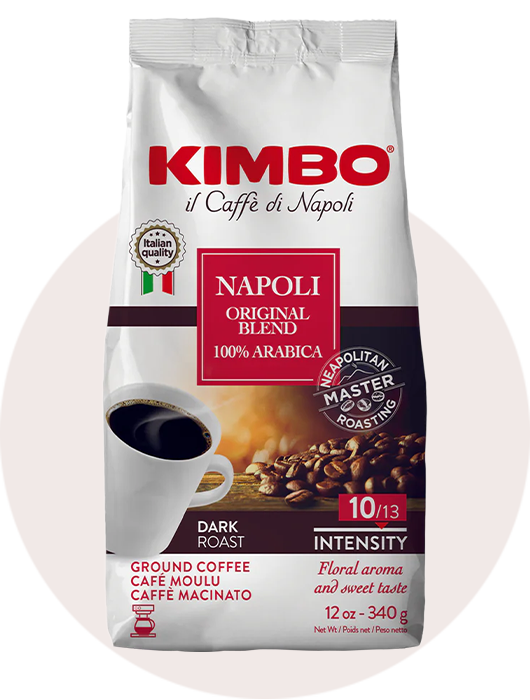
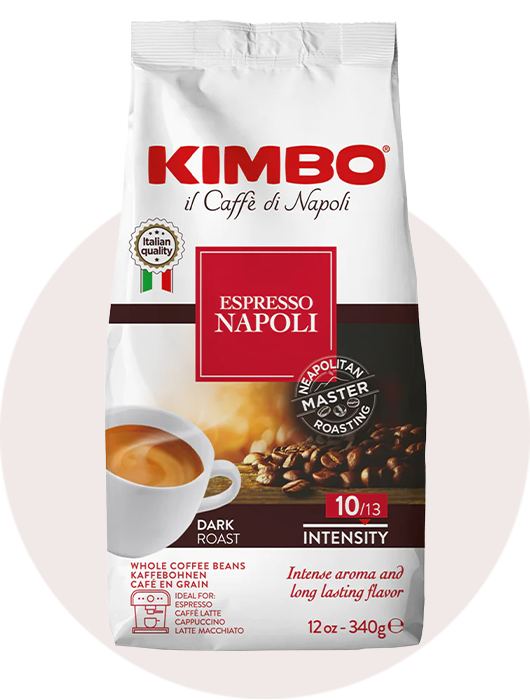
Our whole bean range covers the full Kimbo spectrum. Napoli (Intensity 10/13, dark roast) for the traditional Neapolitan experience. Aroma Gold (9/13, medium dark, 100% Arabica) for a smoother, more delicate cup. Crema Intensa (11/13, medium dark) for bold body. Crema Classico (7/13, light roast) for those who lean toward brighter, more aromatic profiles.
Who whole bean is right for:
- You own a burr grinder (or are willing to buy one)
- You drink coffee daily and care about taste over convenience
- You enjoy the ritual of brewing, not just the result
- You're brewing in a moka pot, espresso machine, French press, or pour-over
Who it's wrong for:
- You don't have a grinder and don't want one
- You need coffee in your hand within ninety seconds of waking up
- You drink coffee occasionally and would waste most of the bag
Ground Coffee: The Workhorse
Best for: Regular brewers who want quality without the grinding step Freshness window: Best within 1–2 weeks of opening, sealed properly Effort level: Low to medium Available Kimbo blends: Espresso Napoli, Aroma Gold, Antica Tradizione, Intenso, Buongiorno, Decaf
Ground coffee is the format most of the world drinks, and there's a reason. It's the middle path — most of the flavor of whole bean coffee with almost none of the effort.
Yes, you lose some freshness compared to grinding on the spot. But here's the part the coffee snobs leave out: properly packaged ground coffee, especially the kind we vacuum-seal in cans, holds its flavor remarkably well. The grind has been calibrated by professionals for the brewing method on the label. The seal locks out oxygen. Open the can and you'll still get that wave of aroma that tells you immediately the coffee is alive.
The trick is the seal. Once you open ground coffee, the clock starts ticking faster than it does with whole beans. That's why we'd suggest buying ground coffee in sizes you'll actually finish — an 8.8oz can over two weeks beats a giant bag that sits open for a month.
Our ground coffee lineup is built around two ideas: tradition and accessibility. Espresso Napoli (10/13) gives you the authentic Neapolitan espresso experience in moka pot or espresso machine. Aroma Gold (9/13, medium dark) is our smoother, premium 100% Arabica option. Antica Tradizione (9/13, medium) leans into balanced everyday drinking. Intenso (12/13) is for those who want serious depth. Buongiorno (7/13, medium) is our breakfast blend — lighter, brighter, made for the start of the day. And our Decaf (9/13, medium) gives the same quality without the caffeine.
Who ground coffee is right for:
- You brew with a moka pot, drip machine, French press, or pour-over
- You don't have a grinder and prefer not to deal with one
- You want better quality than capsules but more convenience than whole bean
- You finish a can of coffee in a few weeks, not months
Who it's wrong for:
- You want the absolute peak of freshness in every cup
- You only drink coffee occasionally and the bag would go stale
- You don't own any brewing equipment and want single-cup convenience
Capsules: The Modern Espresso Bar at Home
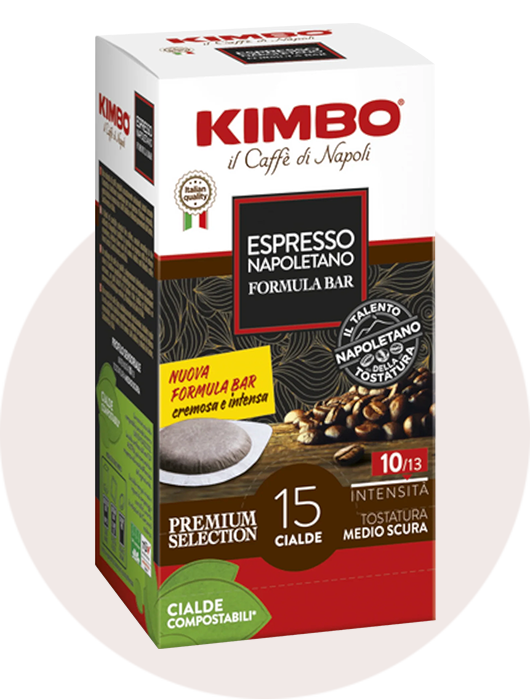
Best for: Single-cup convenience with consistent results Freshness window: Up to 12 months sealed (each capsule is individually sealed) Effort level: Lowest possible — drop in, press button, done Available Kimbo formats: Aluminum capsules (Nespresso® Original compatible), K-Cups, ESE compostable pods
Capsules get a bad rap from people who haven't taken them seriously, and we think that's unfair.
Here's the truth about coffee capsules: when they're made well, they're not a compromise. Each capsule is individually sealed in aluminum or another barrier material the moment it leaves our facility in Naples. That seal locks out oxygen, light, and moisture — the three things that make coffee go stale. While your bag of whole beans is slowly losing freshness on your counter, a sealed capsule is holding onto its flavor as if it were still sitting in our roastery.
That’s the advantage of capsules: each portion stays sealed until the moment you’re ready to brew.
There are real trade-offs. You're locked into the dose and grind that we've chosen — you can't pull a double or experiment with your extraction. The flavor range is built around what works at capsule scale, which means some of the most delicate single-origin profiles aren't going to translate. And there's the environmental side, which we take seriously.
That's why we offer three different capsule formats, each for a different need.
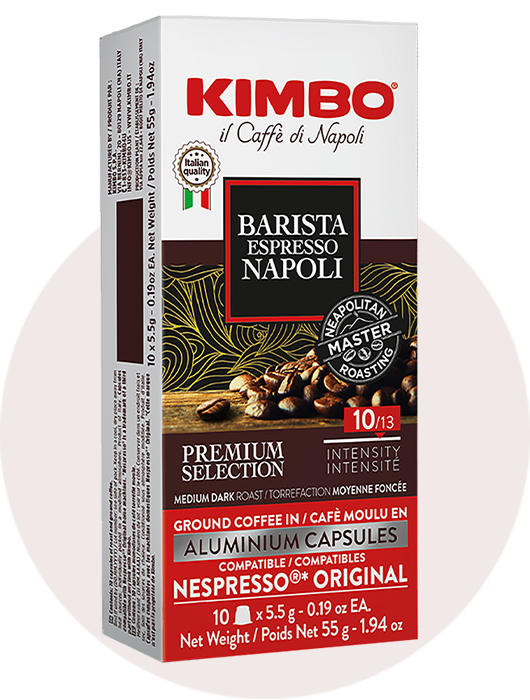
Aluminum capsules (Napoli, Barista, Ristretto, Decaf, Organic): Compatible with Nespresso® Original machines. Fully recyclable. Aluminum is the gold standard for coffee preservation because it's completely impermeable to oxygen, light, and moisture. When you're done, rinse and recycle.
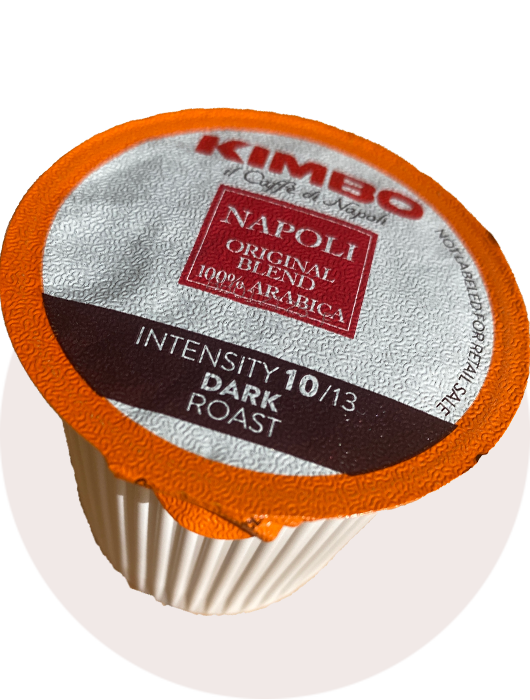
K-Cups (Napoli, Buongiorno): For Keurig brewers. A fast, convenient way to enjoy single-serve Kimbo coffee. Convenient and fast. Recycling availability varies by location, so check your local recycling guidelines.
ESE compostable pods offer a compostable alternative for compatible machines. Follow the packaging and local composting guidelines for proper disposal. If you have an ESE machine and care about sustainability, this is the one.
Who capsules are right for:
- You want a single cup, fast, with no cleanup
- You don't drink coffee every day and need a format that doesn't go stale
- You travel or have a small space where bulk coffee isn't practical
- You want consistency — the exact same cup, every time
- You're not interested in becoming an at-home barista; you just want good coffee
Who they're wrong for:
- You want to control extraction variables (dose, grind, pull length)
- You drink several cups a day and want a more cost-effective option
- You prefer to experiment with different brewing methods
How They Compare at a Glance
| Whole Bean | Ground | Capsules | |
|---|---|---|---|
| Freshness window | Weeks after opening | 1–2 weeks after opening | Up to 12 months sealed |
| Effort required | High (grind every time) | Low to medium | Minimal |
| Equipment needed | Grinder + brewer | Brewer | Compatible machine |
| Flavor peak | Highest | High | Consistently good |
| Best for | Daily ritualists | Daily drinkers | Single-cup convenience |
| Cost per cup | Lowest | Low to medium | Higher per cup |
| Storage life (unopened) | 6–12 months | 12–18 months | 12+ months |
| Waste | Just the bag | Just the can | Pod material per cup |
The Question We'd Ask You Back
If you came to us in Naples and asked which format to start with, we'd ask you three things:
First — how do you actually drink coffee in the morning? If it's a meditative twenty minutes with a moka pot on the stove, whole bean is calling your name. If it's a quick cup before the kids are up, capsules will save your sanity. If it's a drip machine on a timer, ground coffee is built for exactly your life.
Second — do you drink one cup or many? People who drink several cups a day usually find ground coffee or whole bean more economical. Single-cup drinkers, especially those who only have coffee on weekends or who share a household with non-coffee-drinkers, get the most value from capsules.
Third — what's your brewing setup right now? If you've already got a Keurig, K-Cups make sense. If you have a Nespresso Original, aluminum capsules are the move. If you have a moka pot or French press sitting in the cabinet, you're ready for ground or whole bean. The format should match the machine.
There's no shame in any answer. The most beautiful espresso in Naples is the one that gets made. A whole-bean ritual that you actually do is better than the most expensive home barista setup that sits unused. A capsule that gives you a good cup every morning beats a bag of whole beans that goes stale on the counter.
The best coffee is the coffee you actually drink.
Can You Use More Than One Format?
Honestly? This is what most of our customers do, and we think it's the smart play.
Many people have whole bean or ground coffee for their weekend mornings, when they have time to enjoy the ritual — and a box of capsules in the cabinet for weekday mornings when they're running late. Some keep ground coffee for their moka pot, capsules for their espresso machine, and K-Cups for guests.
There's no rule that says you have to pick one. Coffee isn't a tribe. It's a drink.
A Few Things Worth Knowing Either Way
Store coffee properly, no matter the format. Keep it in a cool, dry place. Away from direct sunlight. Away from strong-smelling foods (coffee absorbs smells like a sponge). The freezer is fine for long-term unopened storage, but once you open a bag, keep it at room temperature in an airtight container — repeated freezing and thawing damages the beans.
Don't buy more than you'll drink in a month. Coffee is best when it's fresh. Buying a giant bag because it was on sale only saves money if you finish it before it goes stale. We sell our ground coffee in 8.8oz cans for exactly this reason — it's a size most households finish before the flavor starts to fade.
Grind size matters as much as bean quality. If you're going the whole-bean route, your grinder will affect your cup more than you might expect. A cheap blade grinder produces uneven grounds, which means uneven extraction, which means a cup that tastes muddled. A burr grinder is worth the investment if you're serious.
Capsules aren't just convenience — they're freshness too. This one surprises people. Because sealed capsules limit exposure to oxygen, light, and moisture, they can preserve coffee aroma effectively until brewing. That's because each capsule is its own miniature climate-controlled vault, while the bag has been losing freshness every time you opened it.
Frequently Asked Questions
Which is better: whole bean, ground, or capsule coffee?
None of them is universally "better." Whole bean coffee offers the highest peak freshness and flavor when ground immediately before brewing. Ground coffee balances quality with convenience. Capsules deliver the most consistent cup with the longest sealed freshness window. The best format depends on your brewing setup, time available, and how often you drink coffee.
Does whole bean coffee taste better than ground?
Yes, in terms of peak flavor — but the difference is most noticeable when the whole bean is ground immediately before brewing. Once whole bean coffee has been ground for more than a few minutes, it begins to oxidize and lose aromatic compounds. Properly stored, freshly opened ground coffee from a vacuum-sealed can still delivers excellent flavor, especially when the grind has been calibrated for your brewing method.
How long does coffee stay fresh in each format?
Sealed and unopened, whole beans typically maintain freshness for 6–12 months, ground coffee for 12–18 months in vacuum-sealed packaging, and capsules for up to 12 months. Once opened, whole beans stay fresh for 3–4 weeks, ground coffee for 1–2 weeks. Each capsule remains sealed until use, so freshness is preserved cup by cup.
Are coffee capsules as good as freshly ground coffee?
A high-quality capsule can rival or exceed many home-ground coffee setups, particularly because of how aggressively capsules protect the coffee from oxygen, light, and moisture. The trade-off is flexibility — capsules use a fixed dose and grind, so you can't adjust extraction variables. For consistency and freshness, capsules are excellent. For experimentation and the highest peak flavor, whole bean wins.
Which coffee format is most cost-effective?
Whole bean coffee typically offers the lowest cost per cup, followed by ground coffee. Capsules cost more per cup because of the packaging and convenience. However, the most cost-effective format is the one that doesn't go to waste — if you only drink coffee occasionally, a large bag of whole beans that goes stale costs more in real terms than a box of capsules you actually finish.
Which is more environmentally friendly?
Whole bean and ground coffee generally produce less packaging waste per cup. Among capsules, ESE compostable pods offer a compostable option, while aluminum capsules are recyclable and K-Cup recycling availability varies by location. Kimbo offers all three capsule formats so you can choose based on your sustainability priorities.
Can I use whole bean coffee in a capsule machine?
No. Nespresso, Keurig, and ESE-compatible machines are designed to extract coffee from sealed capsules or pods, not loose grounds or whole beans. If you want to use whole beans, you'll need a grinder and either an espresso machine, moka pot, French press, drip brewer, or pour-over setup. Some refillable capsules exist that let you fill with your own ground coffee, but they require precise grind size and dosing to work properly.
Which Kimbo format should a beginner start with?
For someone new to Italian espresso who already has a Nespresso Original machine, we'd suggest our Barista aluminum capsules — they're versatile, approachable, and showcase the Neapolitan profile beautifully. For someone with a moka pot or drip machine, Espresso Napoli ground coffee is the most authentic introduction. If you want to commit to the full experience and have a grinder, Napoli whole bean is the closest thing to drinking coffee in Naples itself.


