

' d='M19.579 11.47h6.551V18h-6.551z'/%3e%3cdefs%3e%3cpattern id='a' patternContentUnits='objectBoundingBox' width='1' height='1'%3e%3cuse xlink:href='%23b' transform='scale(.00794)'/%3e%3c/pattern%3e%3cimage id='b' width='126' height='126' xlink:href='data:image/png%3bbase64%2ciVBORw0KGgoAAAANSUhEUgAAAH4AAAB%2bCAYAAADiI6WIAAAABHNCSVQICAgIfAhkiAAAIABJREFUeJztnUuvJclRx/%2bRdW73TM%2bAMMIz0G3MY9FjJDYs%2bAawQEggr0AgQCABAmOQLRsLS/OABUIIiTXfAL4AOyQEQkI8zcM8FsD4ARIaHkN7euY%2bzqlgkRGRkZGZderce%2b7te22n1H3rVFU%2bqn75j4jMylOHmJnx1fQVlzbPugHHTK89fggCQCCAgASAwjkp7InHvQpmMEAAc97/%2bj//%2b9Hb/KwS3WXFv/b4IRIIJJAB2Oe8XcCSbJHf17lypnZ7BkPv0ozcCWYwXv2nu9sR7hT4V195iMQZ4mRwKQOmomb7rFdGAHFGT9QHbsmDR73NDDBxhs/ATLkDzAzs7lhHuBPgX3/8sII9CWxVNwGYgApwApAcRO0gPtHwQwZNblvTjAweDOyQLcBMjHnOHWHLjE//0xcvf7FHSN/6zR/Ye86tBf/qKw8xcVGzh50IZt4TkxzPKcP1%2bSB7yB0vKQXg%2bdySmIDZ3aE5783AWc1%2b7hA7zp1gx8COGNsZz6wT7IN/68Cr356oqDQBmIhADKSUYauie6DJqVv3k6GX/VQD9r4fqFWunxVy/pz9/k4%2bzyQmn4Et5R6xBbAFY8uMT/3jzXaAOwP%2btccPMVEGFtVtMGW7NfNFzROARM7X6z/x7dlalEAPKLEABfXrjakCPlZ/z9nHm6%2bXfdB9jK34/h0DF8ifP/mPXzjaPVtKtx68mvTJm3MiTJw/EwEbF8hNiKa/BHa5g5TjBl3%2bqVm3z3ARvh2r6bPgn%2bud2FFrBXZcYoAtckfYIvv9HVT9uRN84h%2buvwMswX9m4DVC3xAZNA88JVV3MeMbgbJBDVsBTlQHdsQlFtDxvVkJUal2hola895LGtjlvwwwYabcPWbZr0HfTkBbJxA3cMGMcwDnzPjkNXaAWwf%2b9ccPi5pBmASgV7j598oSlG1Vt7oH9dmJYVbDAkCReAIwifNP8lc7iqZo7ssBoLpT3r9DAj0GZpYIH2oB8nkXyKq/4GwBLohxMecO8Euf/fwV7uZyGsG/UfDRrE/I4FTZI%2bCTU7fmUdUmhpn/JJ0ABLMYRPm8SYM5Kh0hu4V8%2bcXUI2zUiRDG9%2byie85mZMfAVvzAloF5LtDV5J9z/nuG3AFOwfjYZ4%2bv/mcOXlVuoNWsU%2b4IG/hgrg9849SdWI8L8JQ/QyyGqn2SbUpsZt7%2b6k2IkKmc43YBkEBP7phO6iBb/Gz5dYZPOsRuJuxmifB3wDxnF3BBwAUzTsUCnMm/j1yD%2bnvwbwT8G48fNSrfcO3HJzH7EfgJuSEdStROotwNAZQcbPm7IQDEmFId2eerdsM5%2b8vVMZRTh6ma2NFIj8k6hFqCnczz7mbCVizC2TYDP3cd4JwZpzPjZz/7uSvc7TbdOHhv2itfToQTZ9Y3qnLfOVAUXkw8kFI%2bL1H215ODbSY9sQWEQDlO0hkq8HojUoalpl/9/sjn%2b5smw3YAYu71OLsOwFn5agnOd4TtDriYgYuZcYbSAd7jGe8x4yN/fxz13yh4HZdvvMpR%2b3Kv8o24gA2c3ydgoyadyGBvUgGdEpBE2QZbwCYB7X06xE0w5Xxq1jVVM3kU/vrEPh5gUzoEbKIy48dz7hA8qwWQTjAD2xm4mAnnO%2bB8B5wim/z3mPEuM37m746j/gj/WsB7f24gRc0nKPAnlBm6ExTgkwBPRAZUgU9i2jN0tg6SZMxmsMXEQyAoaO0Y3uyXwK6Y%2b6W0FAD6XV71PJO5A54pjwgY2O2y%2bd/OwPmWcLoDznaMUwKezoz35hk/dQT41w5eoW80aCPCxMW0R5VvUMz6RJCAL0PfiO%2beHPCNmPLKp6dsotWkg/O%2bqGiSc2M6BvAV2QGU4I93udZ5B2zFDWy3%2be/pFnh3SzifGU%2bJ8e7M%2bLG/eXNF6cvJwz8q%2bNcfPxSAYuIJ2HBr2tUKbFBMvKpc/fiGgGkSv90DnkTdicsYHqJsieCBMnTrq/PmgANtvKCjAN5RfrAzA/NMuNgSLnbA2ZbwdMt4l4EnPONHP/Pmypr66VrAL0HfSOB2opYAKNBF5bqd1KQ7tacBcB2%2bEcSM66RMMOUx3TRwbdNSYucStrscB5xvCedb4J1zwjvM%2bNKO8UOf%2bbcDaq3T0cFH6N6Pb5w/P6E6Yt%2boyiVSPxHom6R%2bOwNPyfnxCNyru5qCa9t5G4GX88rkwMyUx/s7wvkuW4CnZ8A7F8CXmPHhv746/CuD3wf9hPqmPW87X%2b5UnoM4CdDE5JP7/GUJvFPBPOcOsN1m9Z9eEJ6cAm8z4wf/8nLwjwL%2bNYG%2bWQndK/5EIvaTlMGdUInck0BOYuY1Qqfov79MgfvPRMAsQd/5BeH8IuH/3gP%2bdwa%2b/y/%2b9YCWlfSt3/yBZkHK6vTqK2Wcrj5doZ8MoOcOAdwTs36SgM0E3EvAyQScJMaUGGnK%2b9NUZt6mxJgmLn7eZljQ3DgCZ%2biDoK6cV8b2o6HZIYHbGuhEPIbuKvTlpQ3j/r0ZD%2b7PeOH5Ge97kfHSCfD73/3tK1vXpksvr54ccA3k7hn8Av0ExZ%2bfIPtzNesnovQ0OV/uVS6PVadUZtuWJlXujMJjJUHhPiW5JiYgnTDubWZME2EzEU5OL63by5n6N155ZOY6m/i%2beW%2bgO39%2bL7mIPZUpWJq4LKpMLGP0uxell/M6t7dzLb3yPHTZYXnmLeH8POHpe4Tv/MPD/f3B4H0wd09UfzKCnsTMo0C/7wK5SSCT%2bnZ9guZV7k16bPxXEvBePgYuThOeniZ86A8Og38Q%2bFdfeWhjcVW5wvdDtg3BOoFCvzdls75JOUrfTGxTsSllc68R%2bzTJg5IB9FsNvJrEDxXtAQ4E6D3g4TMA7C4IX3pnOgj%2bQT7%2bBCWY2yD7dXt4opMzI%2bh%2byCZKj1H7JJMwo9m2rwLv553uz/jazWEee7Xi33j8qETmovgTZOD3Unl2foJs9u%2bRQJeIfQTdnqq5iP3OAY%2bF94AvNCCBa%2bDu3KV88rWiqqqXf2/dMu5V4F97/DBDdcO3E%2b0AVKZiNwzcT1T79D3Q/dg8TXW9X/HAR3k7wP15L//ufvirTH1e0Ej2oMWmXKHz8EXx9uxdlG4PWQbQLXJ3F38ngPsKRsAHjVDgHEdjtAL4wnnccY%2bjtHcg%2bPrjh7YcSp%2bpb6Dr2ciesZ/YY1jYvPtEeSJmkkCugT7V0G/1xIu2zVfgK6L60LBt1Fe5Bra%2bLEuJTeV2nivfOpEc%2b88ffbT3evYqfpKh2yTP1fVZuc3akVO/dI57k0zQTDLjhhzJG3QHn9J6hdspt0XhbrsqbgAcQCM16pRlKfHe8zi5XbpiuK2%2bSYuKf/2VR/a1Jb8EygI7gltIIU/iUp6Dz//YTH0PekrrFK4XQzeo8FxugB4rorCr15DEXejNpBTVeRT66DxO%2bV%2b%2bLwwQgwBbjPLWjy%2brflHx%2biWH/EUH9em6nk2na8u3X3QaNj9hK5MzaXJP2pKumukMfzppyeddh8JzuftV3hTXAy5LrSLwpTzVoU7d6sfLfeFymnche653qPjXX3lUvsRIeUyuJt4eq4LcUqni11XxSWbnyuNVWS0z7Ye%2b5CuvU%2bH7VE4ReketRAI9we7wosIlnx3y9QY/Xnx8UTkRQP67ZHLOf/3EWPVDxWs5GwngVOEJcJM2pQOUadgyFWsdANnsG/SF9MwVrhXFzhbLW1I4UAEf5pF81aFQt07blk4TOkgMEjtV9FJX8ap2r/iEsprGhnEQUy8m3vw68phc17dPOju3AP1WKByoHoQMy2s6BZfXq4jK9yocyJ0F7rpd3Uz5n5UjCgfEVaoyJW%2b0RJwYnBhv/eTD7rV3Fa/fM0uyxNleVEBlOKcBXSLGZqICXVVO2gF0yNaHvqTwhd3teVdRONCVwBrgsYy9CgcMuJ3TUXhiHaKVOlJUeKeNnDquqpO64Ak6ZoeN2VXhZurlnJOJGrPuI/jSY9s66o3B8T3pRoCHBi0CnwGEGcj6XAfd1R2BR4ApnL8a%2bOD%2bNJf9xoce5QidqXyJMaqddH0c2SPVjSyMzON1lAg%2bqH3JpC/s7qYrmfSeenplugYlcAOdJskzy3kj6ImzEIAq6FOTnmTRCU/FpEPuexoFiSgmvWqrjwsIeOunW3PfKF6/maL3RadqvdrzuJ6QJuA%2big9PTuX2bL0XvHTSdQRuXYWPrM%2bCWbcpVn9YAc%2bAfcGvl/aYdWXGU0fhQAEehoWNwt1fks5kYUdnbUADPgPXSL4EdjqOt6EbyULJqYzNk47dSaHfMuChwm7bAnCgfgfOauBwlm4AnLgFDtRm3YDLsYOBrzH1b3zoUVY3d4ZtrB0iq50m/cIDO/DFxGuAdyyTfvB8eqzIm0DdjL7QmXRTeYSuL7yZMLwAErMe69VqzI93VK7QLYjvqTy0W4d1FicQI/kJsgT89899U9XGSvH2BUQq4/jElL/ShBLJ28MYN6Ggpn3feP3GFe621yocGABXlS9Zr4HKdTNG6osqtzx9lRPZV/LzLrG27oIsC4c2V%2bBJgwk52771wkCSxRbElJdOebXrGF4b1Bm63Qrg/sMa4Lp9BeCVH%2b9A9768mgvAADiyCz0EOKO9p1bvGx96JC8OzP/8sipvAewrTmrW4QI5nZ71w47x/WrSUUy6267qjsdRTDqAyqxX7VD7O3JX7pHpXrMeo3UpnwjNFG8POslxP19Pk7sXOnkkeapZv8T4n49%2boxW58WUTlXhFtxU%2bAbaQgiATNwI7B3xcHr7079MwHU3h8rkprgPcp2ZaNJ/UL193eYWH84ZmHSgvXlCFrzDrVdCm1zcxSF%2blPYV6A/DedRh4e9UISm/Uz/5lgvpVp%2bRUbxE8uQtbkW4eOICOWe8C79TRBe62K%2bAAmlk33U1ogOd8NfQRcMyUoQ%2bAAygx1uAeF8UT5Tc/E1lAl6dsxcSTTNiQPHJVU99R%2b750VOCj8pzZHQHv%2bdVeHUcFHuvCHuCaT%2buakeGHplgn7gwPddPfp40/oua8NNhP3lAZs6fi39Qt6MTNUrp1wKPq1gKXzw1wAM3TM81KaIDnvKX8XpReOhdbGcRl/xqznvwx3QcAv/odj8KrQd08fSrRvb53RpU%2bSYFq8kfpaEHbUnl6Y9VdAUAM3DT4CYGU5fdVulUwUeU6hNVVMHl/Dt4IKG/ZkrbazXXJT7WStLsK2nyATAxMpUwPXYPqKsCUlAhIU30db3/8ZQCieJtnIYTp2TK212gxv8WKbTGFPnnrgb1phQMDlfvxcTmpqcc2R8Ddx6hyPVbBWVI4CtzKh3vgMpNm1ikCHw33rKzOcSl/YycqdCpnqgVIkOXSAlnfUDH5Fw75%2b/DMgANe5XqgC9zV1QAP7agfivj8YdmT/t0HXNreBc65HWYtesB9W9cCD/drk%2bvMvlwrshcDI39JQk27f8yqX2H2ZvfGgLu/S8CBZZUfA7ietyZwq4C7z1DA/jF2aIuNzwfDveG1BOC6vfEZ1bxr%2b5Mcy369TOaQvmiI5CasBJ7r7fjweM5BwAHoN1LcgSWV7wUePnvofoaMKP9IgZ9uLXkCcHSCNlN0dps6Y1q1x5cbVK7t7HaITuch99CmnrKV/f41oXk8737piVDeJinba9IalS8Cl%2b0hcGCvyqvie8oJ9a0BPh0CPLZJ2tEDrma919YKuD%2b%2bAnjt43W8HoDrjJ1O0Ch8m7BJHNk16S4CBwp04pKnAh7q6QL39UcoxCW721/5cd9evy%2bqfGDOK%2bChvWbqm4wkFkAmbSyQS2XI0lRYFXEE4FqPS9xZ9gSgDNFcOUPg/vg%2b4FSA2%2bzoZYC7IM2gB%2bC%2bjFVmfQQ8Xm/V3vy3mqvPrwOvV9wA8p4aqSRbBRd1hvRMgLvPDXBgaCpj4moEUGKXmdx6iwXoFXA9V4F7lR8KXMsdPR84ALgeduApnFveFq3AdfWtWoi6s10iUo8qRQu8MevSyIOBu3Y3NQSVe%2bCJZIZ0D3D21xaBS%2bEG/VjA/XUvmHUPXRd/bKpzpLHlJ79gY/nKbFHxH1cC7va1FmQBuIceb5Sd2w6jYmqAy%2bcZOWidIjwU6F3gvRs/AG7tWgCOxKC5UZj9PQQ4iPPCUDlWP5ZNVbnmy8uL/rn8dlvqQD8ScABN8HZM4IAz6x3guh6up/LEwJycy65UHa5Nx/s6Q%2bdVnjibFMlXNXMS4LIdL5TEbVT7m9GF7uayTtAl93QOAKP/Wm%2b9AJIxPUJD1wBX8xGylPM6wF27LIVHkVVSNTIwWgSpwG0uAocBnz28ka8dAAeQp7od1C7wmQrwqlwcBjwed5VJVE/VseI2y6QNSHy8mvlQkOW/JHCgYwZ9uiJwzWwuisqKKv2NulyWa35iE%2bacrIgqrvB/ibiYfqqvyYAL1J5waATcXeMIeG7vHuARvKbeXIyO2ydVnoBsvljQA%2b5uADXnDoDHk9cC98OQ5iLcuVS%2b%2b1D9Lk0HOGMPcNkmiUf8dGsTvC0B12uJHUn/80IbAAeACdwe95bJucENAHA1yJRzCLIQ3%2b1Pxd8jXlgu6HjAxY9fBThRHYEzlXs3mltX1c7k6h%2bopwfc6tHONlM1UqjKANr3BBBWAwcy9MmvufN1VPezPqdSfKuEMlVbfSMEaIH7CwrAInAgTGP6jRXArcx4ce4YJ7YamdzohKQlHeA6SVPf/NA%2baOcg%2bZ2bcqyZdQPGK2JGwMN1Lqk8LxbFauBeXKJ4ORZvouvJxkVm8OAzDoADrUtYBI7QoWLj/fE1wFE6MWndKd5vtii9C9zVVQNvh1Ee3EjhJqCqI7XXuQo43Dk9EfiFHqHOTWyXr5jCZ32/bBnADs5FCxwoprZqxKHAOw22MbWc3wPOS8C1/NipInBks13Nvnk4Ehg0nZNR/HsP%2bEqzrtPl5OvtCWEBeFfxM9rhFAi1wmUyoOvj7XOr8qpDuotr5thj468CHABP8bpXAJdt4txhesDVrDOLOedOWR64y1tZlZXALd8ScKCal%2bieF8HPIuEKmQPuZ5%2bAdcC1jEXgI/O0BricvxY4gyxKz9OXnToEOIjBRGa2qzhXp2RTef1JpS69DUHljRvpPC6N12mLPhbUqxe0BngFXtfla2K/4SN1qb9eCNjkGjfQZsvCcWk40LEAwTSuAV5fpwfOBpxj%2bQpXVA4S0%2brjmCQKh6iQ0Z3wiiq/LHBg2VxD7sMi8Fi3r/bTn/1idTJ1MljjxVeWIYyhaCshl0dvbLzQxKYc8uYuWhcqtbCo0I/DmZBXolrWfPacyricyKk8XJuZ9SkvJLVJHUL99Sqb3kN7wwlV8Gb3yHd0jZM6w1A7X2YV2w7jtgHQhuuOQZ3zg8he/PR/AXDDuRn5R%2b9VHV71jdldMOvV3yU/HhXe6dHV820IwKhw7z5QAzeFpzLJUZVv5aIyqR64tkPH7EAHuFyPAS%2bNaa7X3xcrwlkCTkDqvV0jAG/2NxY01BE%2bG3jVrY5lvSlk799iR%2bhV7oHHRnjg8dgIOKF6RmDAJb9ZRo2%2b0xWAy35bTIryNowRcP3YDRRXArcygDHwxGh8/T7goLoNkpziGTMoB3ky48FKnGRyp%2bMrqp69BBwowVDvGKELHFRUHoFLkdBAjBOQxAk3b3L2bsEDl7LU1JfVw/XrT7q%2bNpj16vjC49Lagjq3MRDUKuDRDRhwDZbrDLWph0b4WeVs8GPZ3FS0z6w3j1VdoQcBl/yHANc/9vxde58C9yZdjq02640bPBC4ntNrs59mJXfQz5F0xOhVHoE3zfrU339RVA/swJiJpTN0llq4yliClCY4s4ttX/5n7U81dHsDVCq/RMXuRiDlPElgzUnKJ2fSvSKo3Fi2c9naQe78PDlSXn9SvUO/smru/T6%2bLg36emKoLAKbtaGE9pUqhPIqleo4lY5lddZ5CSTfoe9AT8CDT71lH5u5emU0y81llmGL%2bfmiCJ2X7rmA3rvg7MLcuV7NyT9Q0YuTvHrNTMA8sd3nLnD5YxDBTVl6DcmZfAVeX4jmKz%2bW1KhzAXg5LwduNI/NevWVqMkfcOayY%2boXzfpgUqgCv6Ps63cgWysAENj5uxmUfzQomjk9eyVwwC9qWHp6tQe4nn8gcAD2GjBTeHUhmi%2bXkfw%2bqzPA6AFHOS/pfx2FW/LAXd54nfljDTzXrReHxVQd/sTffgFbuAgfwI4YM2cLkCP68iiyujaEl/%2bpWVfLEFQ%2bUy7L/1ZsDBRthcyUy24idSr/VIlm0hW6M%2bvmSoiR5DowYTgeh4znK%2bjRrPv2xvsiZp31WiK4iQt0/UqyXZCa2fo688fapAMZ%2bAg6E/Dgk29V%2b5r33M0MzMTYEbAlYMeEmcuN0%2bsp9ymYOa3Y1OwaAHUR3FeQblYBUYkReio3oHDWRoGjPp5QAsBG4ZavlNG0Ma6CkWsdKTw/SWvdQ/WotntC36wvKlzLcql57uJSA35LjAsQdgzsAGfiXX0JJeSLvs2ZXH9sdsDtmXg4R9/mlC/I%2bftLANePeWR6JOB%2b/wg4k1v3FsrxZj1G6pq/l6cDHKC6fnfdHPK3F9zxBB//my/k6J6zz98CmGWsx8jDPNKZJe/bJhgQH%2bzNpDNubIsWInRyLUnEfegC1aZvzaI4U%2blUDu1oYmq7gRuQ17ipHx%2bZdX8DE8r7a%2b06isJZf3gplGNm3bnA2n4H10FivoNJz8AddDdS8lPLJgICXvh4beaBwdurL8A4J8ZzQnLLwJxDfBD0sQcWFc6cb6rMlcjjTdco%2baP7c4cZqFx9NAbAq9si7sGVMQTuMjXAY1AlQSYicGmQflGhAa5Aq9FHMOsrFZ6vWz4eqPCYurHf1/zSr4EZ2IKxFfXnuXzXFA3cwrXkiR950CE3KgZj2ml0cYRXeRW8uQDPXhPC7mY66L4cX0Z3eObWqlcqt39O5foKkgqe66ATmy/35VSvNbV8gUpYfjVSuJr1CH2k8JKTWndklzD4pcnf%2ba4P4sUp4WuJ8CIRvuYEePE5xvP3Z9x7bsbmXu2PbHZXZulGU6b%2b57J8YBj9eIwD8oxguJFWDkw53Rk3uzEDldvNa4dV3RsXgjffkN5XkptCwtw5ETX7rJDkmuVFEE6LwDXTg4%2b1Zh5Y%2bE2ac2ZcMOOCCLsE7Li8vxc7As/5GxoGfBLg6EBEberTCuCsnxn5P2cF4DcDcADt8KwH3JfVA851Xf68JnhT4Fafnr8HOEisT2vSDbiDvh54V8t1U0YHPvqZL%2bAcnP09cwY/A/NMZXpVKvYTIbXpgpn0XBmXCDuMx6tn7upCJE6wm%2blueKISlHmVN9OsPeiurMasczDrek5QuZaTXw/jXE8PurbVmpHf/l3FGdpgnQ/wwKdg0gN0M%2blhHmWkdmDP785dcA7stgAuAGx3hC0z7mnZ/glWAO4V7s161xpQfS4UuFyAT/mGu46m%2bargCWPgtq9WuQllcE5UeX%2b2DS3wRpGhbU7hsVndpWFuu6vweB8Gaah4APjIX30eZ2BcMHAGxjlnk89SlyncGgJgqv24/pwHy34dCjbDMs0vM2axdQnIc/kBuqncK8ENwXSlTheozNqZWfdWIASbNgrrzrZpPqrzV4qkMnT0VywF%2b4k6ntBdKWTXNFC4h/7gF8dqB1b8tuwpM54HYwvCdgZ2O8J2R5hmMhNP2ljX1vy3qJxmuRi5oGZ9vY9wo8rdTdz3uNR2uc5VdtYdov%2bYuK/y5osRVR4H3LXHFF61rVa4zzZUuLZ5SeG9PAtpUfEA8PN/%2bXmcM%2bOMgTMA5ztgNxN4Vh%2bMaoGjmnVVuR2Yilk3Hw5A19z1oPtfWqjXvblyw40lQnnTZoROqB%2bnrlD5RKhfCBzfUqkO2XcqVbiadR3Xdsy6WptFhdN%2bhfs8%2b9TumrCcfuLPP4dTZpwx42xL2An8rZCogIPrnqvAgXp9vQeuCgrQeyrv%2bvL4jLwKgNzxHnA9R1IDPLbR8oiZrqzICuDel/vALQLHCuAIeVaYeE17Tb2mDJ5wBsbpTLg/E2gH0InWmYGT%2b80Ws6bO4o0edNjmWrMuZSloisdV4X7fYHgGFLOu7%2betyuopHLXCY7uqHdGsS0zSzHVYFXtMum9b3F6ZVikeAH7yzz6H95hxCuBsC2y3eWhnj2MVkihLm22LF1xgVt1Q9aPOrAPugcrAl9MUoAezXy2a6Ck8QPcvZR5ZoUrhCAq3a/QNrfPb8JZga/d9ssetSwr3xVO9/eCj69QemrU//fCfvonTGTidgbMtYd4BPBPsV47JvSakMq0OeLyh1FH5wjPyCrjW4YG79XDdlyQE4DQ54P5XriPwCiCBqi/X6zVSN4/NDWAP8Lgitwe8cWVteWvSalOv6enMeJ4JpxeEF3aEkx2w2bgXCDQ3wzUwwKxm8FThqM%2bxzfAumMqEU1jMkVCmGeNEDcSPk2tOfD5ulVKVLz88QZ2iH3dl7DPr5iKiwnsp5g9lPfiF9WpfqmaYfuRP38TTmfF0Bs7OE7bbJM/aB9BVeQPoXYVrPmTgHjrBqZy4fmV6/DFAK6tE6%2bQeH2PiPvQYuEH8bgPdNVQ/ewEMzLpF/e5bOV2Fa/E%2bf6cDHQrdmn5o%2bvCfvIl3GHhyRrjYUn5wbyU6X94Dvu8ZuZrxFIBXvjzHFRVwgnupjZaVb2wEPqUO8ITSe4PKW7OOQSeoBdA167ZCdQ9wPbbHpF8Gumvu4en7/ujf8M4MnJ0lbM%2blRcMZLZjKPfAedAPuLtiAJwdc/%2bmPAY6AJ7TAI0QP3CalBPiCr/f7OADncF4Z20sd%2b4APxujHSgf7eJ%2bezIwHp4TnnkvYPJjFfIaTglnvLooQ4Lpt%2b/S4D9g0%2bZ/7DH5cx%2bJM8qve4bl3nYeqvH0/3mmz7POvWVnlx5ekNhq2DtJl1b6vGXvTD/zRm3h7B7zznqg%2bqDwRNypvkkL3N02hxyhd/%2bp2B7itzCXIL2F2FN5RefG7nXNjUt9NpYMN/bhCX1I44WCFXwU6gPFCjEPSH3/Pt%2bGDX7fDC1%2b/NTOtwIEVwP0%2boChc9lV/Y9DGZOvcZjlPf0yhq/JHi84eAAACyklEQVSewuPNXjDBtiYf4VGpbTpTtU/lobOvTVeFDhwJPAD82fd%2bGz748Bz3X9hV/m3kx3W72q/A3L5LAY9le%2bCSvwbUqSMknYZeBVzbuAQ8Xt/KdAzowBHBA8C/fPhb8L6XzwH/hX1fWe/XDy8BPA/jnIu3iHoQuLn8lwWOUJTmvSngwPGgA0cGDwD/8WMfwPPv29aV9N71psBzK8rxFP7q8X3AfdkRuH6M4PYEWv5btLH9DXAgrKhp81jbLpGOCR24BvAA8N8/%2b01I92XYNXgok%2bc%2bBjNWjXvIPn92%2b7sqj5E6rgYcyTXxGQEHjg8duCbwAPD2x152tcjf5KycV%2bnI5FJZv79o1nvAwah/2LVTvk9ueOaBE/KXRp8FcOB6oAPXCF7T2x9/2eBWKl%2bKpKlE9fZ6Mjl/32rWqwLXJi4CH/nxaFku4cc1XRdwTdcOHgCefOJlre3SwAGn8ipPPnhM4JZ/LXA9f5TvwHTd0IEbAg8AT375JalRduzx48ndyO7XpTxw/0x8X6Tu9tuSsTXAR2XGeu8AdOAGwWt68qmXuipnlMeleb/8Ie5MA9NRgANAcsvH4vz6lyNwTTcOHgCe/MpL64B3zLoB13P3BVIeuCtvFfBemT3Qdww68IzAa3ry6ffXP5SjPFPrS/Ow7OrAgQz90sD99h0ErumZggeAL736/ho4UN30Cng4tu9z%2b048Ad6M7W8WOPBsoQO3ALymd974hmsDDgAT0zLwWObIlN9hlft0a8Brevqr3wB7yR1w8LPxeI4BB5xiv3KBa7p14H16%2buvvr3cMOkF86yUgwds%2b4L7MJciXhH7bYPt0q8Frevob7293DlReAQckEPwq8JjuBHifnv5m7gTtu21XApfz95rxA6HfBdg%2b3TnwMb37Wy%2bVOXXgxoDfNdAx3XnwvfTub3digzWB2mD/XYfcS1%2bW4L%2ba9qf/B%2b%2bI5h5udww7AAAAAElFTkSuQmCC'/%3e%3c/defs%3e%3c/svg%3e "discover")
'/%3e%3cpath d='M11.036 8.335c.034-1.393 1.276-2.595 2.66-2.616 1.382-.004 2.764 0 4.146-.002-.004 4.661.007 9.323-.006 13.983-.053 1.377-1.281 2.556-2.65 2.58-1.385.005-2.77.001-4.154.003v-5.819c1.345.318 2.755.453 4.127.243.82-.132 1.718-.535 1.995-1.386.205-.728.09-1.493.12-2.24v-1.735H14.9c-.01 1.147.022 2.296-.018 3.442-.063.705-.761 1.152-1.425 1.128-.824.009-2.457-.597-2.457-.597-.004-2.15.024-4.841.036-6.984Z' fill='url(%23b)'/%3e%3cpath d='M18.727 12.045c-.125.027-.025-.425-.057-.597.009-1.085-.018-2.17.015-3.254.107-1.376 1.384-2.509 2.756-2.477h4.04c-.005 4.661.006 9.323-.007 13.983-.053 1.377-1.281 2.556-2.65 2.58-1.385.006-2.77.001-4.154.003v-6.375c.946.776 2.231.897 3.41.899.887 0 1.77-.137 2.633-.342v-1.168c-.972.484-2.115.792-3.192.514-.752-.187-1.298-.914-1.286-1.69-.087-.806.386-1.658 1.179-1.898.984-.308 2.057-.072 2.98.329.197.103.398.231.319-.099v-.918c-1.543-.367-3.185-.502-4.735-.103-.45.127-.886.319-1.25.614Z' fill='url(%23c)'/%3e%3cdefs%3e%3clinearGradient id='a' x1='26.262' y1='13.646' x2='33.076' y2='13.646' gradientUnits='userSpaceOnUse'%3e%3cstop stop-color='%2358B03A'/%3e%3cstop offset='1' stop-color='%2355B330'/%3e%3c/linearGradient%3e%3clinearGradient id='b' x1='10.887' y1='14.159' x2='17.73' y2='14.159' gradientUnits='userSpaceOnUse'%3e%3cstop stop-color='%230F6EB6'/%3e%3cstop offset='1' stop-color='%23006DBA'/%3e%3c/linearGradient%3e%3clinearGradient id='c' x1='18.66' y1='13.806' x2='25.479' y2='13.806' gradientUnits='userSpaceOnUse'%3e%3cstop stop-color='%23DE0D3D'/%3e%3cstop offset='1' stop-color='%23E30138'/%3e%3c/linearGradient%3e%3c/defs%3e%3c/svg%3e "jcb")


Neapolitan coffee is not simply a beverage — it is a centuries-old philosophy born in the narrow alleys and sunlit piazzas of Naples. At Kimbo, we have spent over sixty years preserving this philosophy, roasting it into every bean, and sharing it with more than one hundred countries across the globe. This is the definitive guide to understanding what makes Neapolitan coffee unlike any other coffee on earth.
The Essence of Neapolitan Coffee: More Than a Darker Roast
When coffee lovers speak of Neapolitan coffee, they refer to a specific roasting tradition, a deliberate blending philosophy, and a cultural ritual that has remained largely unchanged since the eighteenth century. Neapolitan coffee — or caffè napoletano — is defined by its darker roast profile, its masterful balance of Arabica and Robusta beans, its velvety thick crema, and an unmistakably bold, full body that lingers on the palate long after the final sip.
Unlike the lighter, more floral roasts favored in Milan or the medium-bodied espresso culture of Rome, Neapolitan coffee occupies the deepest end of Italy's roasting spectrum. The beans are roasted at higher temperatures and for longer durations — typically between 160°C and 250°C for eight to twelve minutes — a process that draws out the beans' natural oils, caramelizes their sugars, and eliminates the bright acidity found in Northern Italian blends. The result is a cup that is smooth, intensely aromatic, and profoundly satisfying, with tasting notes that lean toward dark chocolate, caramel, toasted hazelnut, and a faint, pleasant bitterness that pairs beautifully with sugar — a Neapolitan staple.
At Kimbo, we consider this roasting philosophy a form of craftsmanship. Our production facility in Melito di Napoli employs roasting techniques passed down through three generations of the Rubino family, blending the intuitive artistry of traditional maestri torrefattori (master roasters) with precision-controlled modern technology. Every roast profile and every extraction is the result of meticulous control, accumulated experience, and continuous refinement.
A Brief History: How Naples Became the Coffee Capital of Italy
The Arrival of Coffee in Naples
The love story between Naples and coffee stretches back to the early eighteenth century, though some food historians trace the connection as far back as 1450, when the beverage is believed to have appeared at the University of Salerno. The true explosion of Neapolitan coffee culture, however, unfolded in the 1800s with the emergence of itinerant street coffee vendors — the caffettieri ambulanti — who carried steaming pots through the city's labyrinthine streets, offering cups to workers, merchants, and passersby alike.
The Catholic Church initially opposed coffee, considering the dark, stimulating drink "diabolical." But the arrival of Maria Carolina of Austria at the Bourbon court introduced coffee to the Neapolitan aristocracy, and from there it cascaded through every social class. Grand cafés such as Caffè Gambrinus, founded in 1860, became meeting places for intellectuals, politicians, and artists. Coffee in Naples was never merely fuel — it was a social currency, a gesture of hospitality, a shared ritual that bound the city together.
The Rubino Brothers and the Birth of Kimbo
Our own story begins in the 1950s, in the Rione Sanità district of Naples — a neighborhood where the aroma of roasting coffee mingled with the lively sounds of daily Neapolitan life. The Rubino brothers operated a small pastry shop with an adjoining bar, where they began roasting dark blends for a fiercely loyal local clientele. Among their earliest customers was the legendary Neapolitan actor Totò himself.
That blend, perfected over years of experimentation, led to the official founding of Cafè do Brasil S.p.A. in 1963. The name "Kimbo" was chosen to evoke the exotic, distant lands where coffee beans are cultivated — a short, memorable word designed to travel far beyond Naples. And travel it did. By the 1970s, Kimbo had established a modern production facility and launched television advertising campaigns that cemented our association with tradition, conviviality, and quality. By 1994, we had risen to the number two position in Italy's packaged coffee market, a position we maintain to this day while covering over one hundred countries worldwide.
The Neapolitan Coffee Blend: Why Arabica and Robusta Belong Together
Understanding the Two Bean Varieties
In the world of specialty coffee, single-origin Arabica beans often receive the highest praise. Arabica is prized for its delicate sweetness, nuanced aromatic complexity, and lower caffeine content. Robusta, by contrast, is frequently dismissed as the "lesser" bean — harsher, more bitter, and primarily valued for its higher caffeine yield.
Neapolitan master roasters have always understood what the specialty coffee movement is only beginning to acknowledge: Robusta is not inferior; it is complementary. In the right proportions, roasted with the right skill, Robusta contributes exactly what a true espresso demands — body, structure, crema, and staying power.
The Kimbo Blending Philosophy
At Kimbo, we select Arabica beans primarily from Central and South America, where the altitude, soil composition, and climate produce coffees with intense sweetness and aromatic depth. Our Robusta beans are sourced from Asia, where the varietals yield the dense, persistent crema and full-bodied mouthfeel that define a Neapolitan espresso.
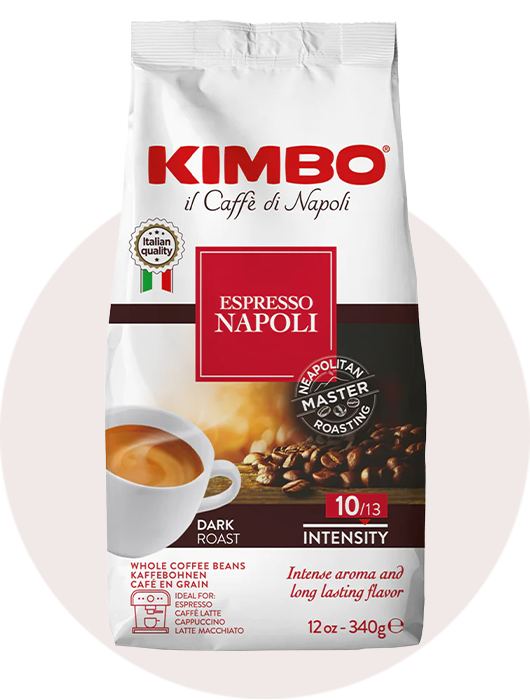
Our flagship Espresso Napoletano blend — an 80% Arabica and 20% Robusta composition — represents the classic Neapolitan bar coffee: full-bodied, soft, sweet, with a long-lasting crema. It carries an intensity rating of 6 out of 6, with maximum persistence in taste and body, yet remains smooth and never harsh. This is the same blend served in thousands of bars across Naples and Southern Italy — the authentic taste of the city distilled into a single cup.
Beyond Espresso Napoletano, our range expands to address every palate and brewing preference:
- Kimbo Aroma Gold 100% Arabica — For those who prefer the purest expression of Arabica sweetness, with notes of rich dark chocolate and a medium-to-dark roast profile.
- Kimbo Extra Cream — A perfectly balanced blend that emphasizes the thick, sweet crema that Neapolitan coffee is famous for, making it ideal for cappuccinos and lattes.
- Kimbo Crema Intensa — A medium-dark roast with delicate spicy notes of cinnamon and pepper, full body, and the signature "tiger's mantle" crema pattern prized by professional baristas.
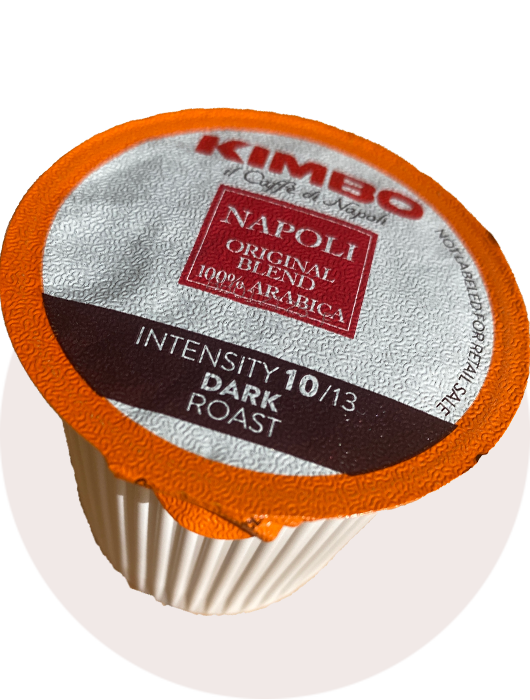
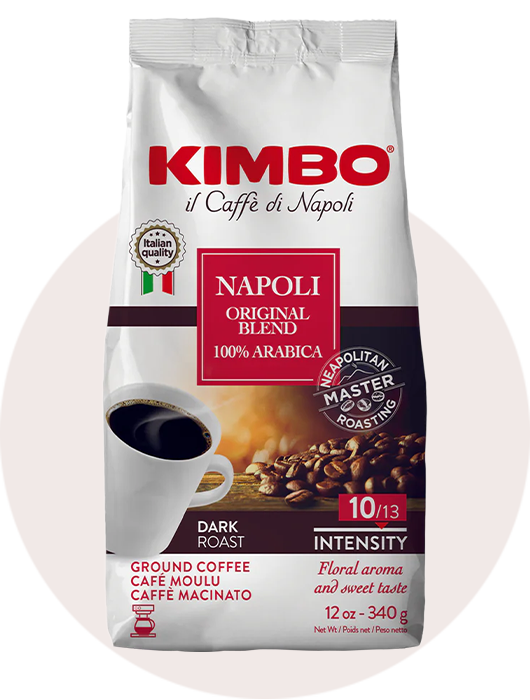
- Kimbo Napoli — A rich, bold expression of the city itself, designed for those who want an authentic bar-quality experience at home.
Each blend is roasted, blended, and packaged entirely in Italy, at our facility in Melito di Napoli. We never outsource. The tradition that began in the Rubino family pastry shop remains unbroken.
The Neapolitan Roasting Method: What Makes It Different
Darker, Longer, and With Purpose
Neapolitan roasting is not simply about making coffee darker. It is a deliberate, multi-stage process designed to achieve a specific flavor architecture — one that prioritizes body, sweetness, and aromatic persistence over the bright acidity and fruity notes favored by lighter roasting traditions.
The process unfolds in three carefully monitored stages:
- Drying Phase — The green beans are gradually heated to eliminate residual moisture, preparing them to absorb heat evenly during the subsequent roasting.
- Development Phase — This is the heart of the roast, where the Maillard reaction and caramelization transform raw, grassy flavors into the complex notes of dark chocolate, caramel, toasted nuts, and molasses that characterize Neapolitan coffee. Temperatures range from 160°C to 250°C, and our roasters monitor every second of this transformation.
- Cooling Phase — The beans are rapidly cooled to room temperature, locking in the developed aromas and preventing over-roasting, which would introduce unpleasant carbon or ash notes.
At Kimbo, our Research and Development department works in tandem with our master roasters to ensure that each batch — whether destined for whole beans, ground coffee, or capsules — undergoes roasting that is calibrated to the specific blend composition and intended brewing method. The roasting intensity for a moka pot grind differs from that of an espresso-machine grind; the duration for a full-bodied bar blend differs from a delicate 100% Arabica. This level of precision is what separates a Neapolitan roaster from a commodity producer.
Why the Darker Roast Reduces Acidity
One of the most practical benefits of Neapolitan-style dark roasting is its naturally low acidity. The extended roasting process breaks down the chlorogenic acids responsible for the sharp, tangy brightness found in lighter roasts. For coffee drinkers who experience discomfort from acidic beverages, Neapolitan coffee offers a smoother, gentler alternative — without sacrificing depth or intensity.
Naples Bar Culture: The Ritual Behind Every Cup
Standing at the Counter
In Naples, coffee is consumed standing up. The ritual of walking into a bar, ordering an espresso at the counter, drinking it in three sips, exchanging a few words with the barista, and walking out — the entire experience takes less than five minutes. This is not fast food; it is efficient pleasure. The Neapolitan bar is a democratic space where factory workers, lawyers, students, and retirees stand shoulder to shoulder, united by the shared act of drinking coffee.
The average Neapolitan drinks roughly five coffees per day — not as a caffeine crutch, but as a social punctuation mark that organizes daily life. The first espresso arrives with breakfast, often alongside a sfogliatella or cornetto. Another follows mid-morning. A post-lunch espresso aids digestion. An afternoon coffee provides a pause from work. And an evening espresso caps off the day. Unlike many other Italian cities where coffee is primarily a morning ritual, in Naples, coffee knows no schedule.
The Caffè Sospeso: A Cup of Generosity
Perhaps the most beautiful expression of Neapolitan coffee culture is the caffè sospeso — the "suspended coffee." In this tradition, a customer who is feeling particularly happy or fortunate pays for two espressos but drinks only one, leaving the second "suspended" for a stranger who cannot afford it. It is not charity; it is the sharing of pleasure. As the Neapolitan writer and filmmaker Luciano De Crescenzo once wrote: "When someone is happy in Naples, instead of paying a cup of coffee for himself, he just pays another one for someone else; it's like offering a cup of coffee to the rest of the world."
The tradition boomed during the hardships following Italian Unification in 1861 and expanded further during World War II, when solidarity became a survival mechanism. In 2010, the historic Caffè Gambrinus helped revive the tradition, and the caffè sospeso network now extends to coffee shops in Bulgaria, Australia, Canada, Spain, Argentina, the United States, and beyond. December 10 is observed internationally as caffè sospeso day, aligning with International Human Rights Day.
At Kimbo, the spirit of caffè sospeso is woven into our identity. Coffee, for us, has always been an act of connection — a bridge between strangers, between generations, between Naples and the world.
The Cup, the Water, and the Crema
Neapolitan espresso is traditionally served in a small, rounded ceramic cup — thicker and more heat-retentive than a standard espresso demitasse — accompanied by a glass of water to cleanse the palate between sips. The dense crema on top, produced by the Robusta component in the blend, is stirred gently with a teaspoon before drinking to ensure a uniform flavor from first sip to last. Sugar is almost always added; ordering coffee amaro (bitter, without sugar) in Naples is the exception, not the rule.
The Cuccumella: Naples' Iconic Coffee Maker
A French Invention, a Neapolitan Soul
Long before the espresso machine and the Bialetti Moka pot, Naples had the cuccumella (also known as the Napoletana) — a flip-drip coffee pot invented by Parisian engineer Jean-Louis Morize in 1819. The device consists of two metal reservoirs separated by a central filter basket. Water is placed in the bottom chamber, the basket is filled with finely ground coffee, and the pot is set over a flame. When the water reaches boiling, the pot is flipped upside down, allowing the water to drip through the coffee grounds by gravity alone — no steam pressure, no mechanical force.
The resulting brew is fundamentally different from both espresso and moka coffee. It is intensely rich and aromatic, with a velvety body and a rounded sweetness that reflects the slow, patient extraction process. Until the 1970s, large cuccumelle capable of serving ten or twelve cups were a fixture at Sunday family meals across Southern Italy.
A Cultural Icon in Theater and Film
The cuccumella holds a legendary place in Italian cinema and theater. In Eduardo De Filippo's Questi Fantasmi (1946), the protagonist Pasquale Lojacono delivers an entire monologue dedicated to the proper preparation of coffee with the Neapolitan pot — a scene that remains one of the most beloved moments in Italian theatrical history. Sophia Loren, herself a proud Neapolitan, reprised the ritual in the film adaptation, using coffee preparation as a vehicle for intimacy and connection.
Today, while espresso machines dominate both bars and homes, the cuccumella endures as a symbol of slow ritual, hospitality, and Neapolitan identity. At Kimbo, our ground coffee blends — particularly Espresso Napoletano — are calibrated to perform beautifully across every brewing method, including the traditional cuccumella, the moka pot, the French press, and modern espresso machines.
Neapolitan Coffee vs. Northern Italian Coffee: A Regional Comparison
The Italian peninsula is unified by its love of coffee but deeply divided in how that coffee is prepared and consumed. Understanding where Neapolitan coffee falls on this spectrum reveals why it occupies a category of its own.
| Characteristic | Naples (South) | Rome (Central) | Milan (North) |
|---|---|---|---|
| Roast Level | Dark to very dark | Medium-dark | Medium to light |
| Bean Blend | Arabica-Robusta (typically 60-80% Arabica) | Arabica-dominant with light Robusta | Often 100% Arabica |
| Body | Full, syrupy, heavy | Rounded, balanced | Light, clean |
| Crema | Thick, persistent, hazelnut-colored | Moderate | Thin, golden |
| Acidity | Very low | Low to moderate | Moderate to high |
| Tasting Notes | Dark chocolate, caramel, toasted hazelnut, molasses | Nutty, chocolatey | Floral, fruity, citrus |
| Sugar | Almost always added | Often added | Frequently drunk amaro |
| Pace of Consumption | Quick, standing, social | Quick, standing | Quick, standing |
This is not a ranking — it is a map of regional identity. Neapolitan coffee is built for intensity, warmth, and staying power. It is coffee that announces itself, lingers on the palate, and invites you to slow down even while standing at the bar.
How Kimbo Brings Neapolitan Coffee to the World
From a Pastry Shop to 100+ Countries
The journey from the Rubino brothers' pastry shop in Rione Sanità to a global presence spanning more than one hundred countries is a story of commitment to a single idea: that the Neapolitan coffee experience should not be limited by geography.
In the 1960s, Kimbo pioneered vacuum-sealed packaging — the iconic tin can that became a symbol of quality and freshness — making it possible to transport Neapolitan coffee anywhere in the world without sacrificing aroma or flavor integrity. By the 1990s, our export network had expanded across Europe, the United States, Canada, Australia, and the Middle East. Today, Kimbo operates strategic subsidiaries in the United States and the United Kingdom, and we actively train baristas internationally to ensure that the craft of Neapolitan espresso preparation is passed on with the same rigor as the roasting itself.
Adapting Without Compromising
As coffee culture evolves — with the rise of single-serve pods, capsule systems, and specialty brewing methods — we have adapted our product range to meet modern convenience without compromising our Neapolitan DNA. Our portfolio now includes:
- Whole bean blends for espresso machines and grinder setups
- Pre-ground coffee calibrated for moka pots, French presses, drip brewers, and the traditional cuccumella
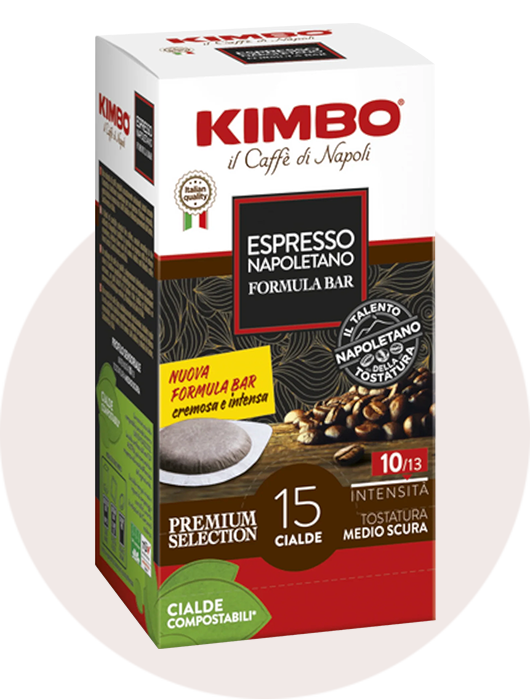
- ESE pods for espresso pod machines
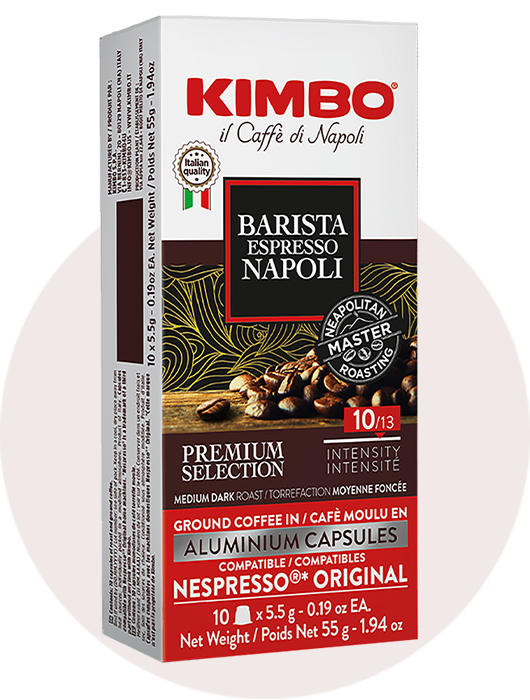
- Aluminium capsules compatible with Nespresso® Original systems
- K-Cup® pods for single-serve brewers
- Compostable pods reflecting our commitment to environmental sustainability
In 2019, we obtained the OK Compost TÜV Austria certification — one of Europe's most rigorous environmental standards — for our compostable capsule line. Sustainability is not an afterthought for Kimbo; it is an extension of the same values that have guided us since 1963: respect for the raw material, respect for the craft, and respect for the communities that grow, roast, and consume our coffee.
Official Coffee of the Louis Vuitton 38th America's Cup
In 2025, Kimbo was announced as the Official Coffee and Official Supplier of the Louis Vuitton 38th America's Cup, hosted in Naples. This partnership, extending from the Preliminary Regattas in Sardinia through the Match in Naples in 2027, represents a convergence of values that both organizations share: tradition, innovation, precision, and heritage. As Mario Rubino, Chairman of Kimbo S.p.A., stated, the America's Cup offers "a once-in-a-lifetime opportunity" to share the authentic experience of Neapolitan coffee with the world on one of sport's grandest stages.
The Kimbo Quality Process: From Origin to Cup
Bean Selection at the Source
Quality at Kimbo begins not in Naples, but in the coffee-growing regions of Brazil, Peru, Colombia, and Indonesia. Our sourcing specialists travel directly to plantations, evaluating growing conditions, cultivation practices, and the environmental sustainability of each farm. Samples are shipped immediately to our Neapolitan facility for rigorous quality testing.
The Tasting Laboratory
Once samples arrive at Melito di Napoli, a dedicated team of expert tasters — using what we consider the most sophisticated instruments available, their trained noses and palates — conducts comprehensive evaluations. Each batch of green coffee must pass these sensory assessments before it is approved for roasting. This human-centered quality control process is a deliberate choice; no machine can replicate the discernment of an experienced taster trained in the Neapolitan tradition.
Roasting and Packaging
Approved batches are roasted according to the precise specifications of each blend — adjusting temperature curves, duration, and cooling rates to match the intended flavor profile and brewing method. The finished coffee is then packaged using nitrogen-flushed or vacuum-sealed technology to preserve freshness, locking in the volatile aromatic compounds that give Kimbo its distinctive character.
How to Brew Authentic Neapolitan Coffee at Home
Espresso Machine
For the closest approximation of a Neapolitan bar espresso, use a finely ground blend such as Kimbo Espresso Napoletano. Dose 18 grams into your portafilter, tamp firmly and evenly, and extract for 25 to 30 seconds. The ideal shot should produce a thick, hazelnut-colored crema with the "tiger's mantle" streaking that baristas prize. Add sugar to taste — as they do in Naples.
Moka Pot
Fill the bottom chamber with cold water up to the valve. Add medium-fine ground coffee to the filter basket, leveling without pressing. Heat gently over a low flame. When coffee begins to rise into the upper chamber with a gurgling sound, remove from heat immediately to prevent over-extraction. Pour and enjoy.
Cuccumella (Neapolitan Flip Pot)
Fill the water chamber, place finely ground coffee in the central filter basket, and assemble the pot. Heat until steam escapes from the small hole in the upper chamber. Remove from heat, flip the pot, and allow the water to drip through the grounds by gravity. This method takes patience — roughly ten to fifteen minutes — but the reward is an incomparably smooth, aromatic cup.
French Press
Use a coarse grind. Add coffee and hot water (just off the boil, approximately 93°C to 96°C). Steep for four minutes, press the plunger slowly, and serve immediately. The French press highlights the chocolate and caramel notes in Neapolitan blends beautifully.
The Neapolitan Coffee Experience: A Diagram of Tradition

Why Neapolitan Coffee Is Different: The Complete Picture
Neapolitan coffee stands apart not because of any single variable, but because of the irreducible combination of all of them: the darker roast that eliminates acidity and amplifies body; the Arabica-Robusta blend that produces both aromatic complexity and structural crema; the cultural tradition that treats coffee as a ritual of human connection rather than a caffeine delivery mechanism; and the unbroken chain of knowledge passed from generation to generation of master roasters, baristas, and coffee-loving families.
At Kimbo, we do not merely make Neapolitan coffee. We are Neapolitan coffee. Our roots are in the same alleys, the same pastry shops, the same bar counters where this tradition was born. Every can, every bag, every capsule we produce carries the accumulated wisdom of over sixty years of continuous refinement — and behind it, centuries of Neapolitan culture.
When you open a tin of Kimbo Espresso Napoletano, you are not simply preparing a beverage. You are participating in a tradition that connects you to the sunlit piazzas of Naples, to the generosity of the caffè sospeso, to the slow patience of the cuccumella, and to the uncompromising pursuit of the perfect cup that has defined our city — and our company — for generations.
Frequently Asked Questions About Neapolitan Coffee
What makes Neapolitan coffee different from regular Italian espresso?
Neapolitan coffee is distinguished by its darker roast, its deliberate use of both Arabica and Robusta beans in the blend, and its resulting flavor profile: full-bodied, low in acidity, rich in crema, with tasting notes of dark chocolate, caramel, and toasted nuts. Most Italian espresso outside Naples uses lighter roasts and higher Arabica percentages, resulting in a brighter, more acidic cup.
Is Neapolitan coffee stronger than other espresso?
In terms of flavor intensity and body, yes — Neapolitan coffee is bolder and more full-bodied than Northern Italian espresso. In terms of caffeine content, the inclusion of Robusta beans (which contain roughly twice the caffeine of Arabica) means Neapolitan blends often carry a slightly higher caffeine punch per shot.
Why does Neapolitan coffee have such thick crema?
The thick, persistent crema is primarily produced by the Robusta beans in the blend. Robusta generates more carbon dioxide during roasting than Arabica, and it also contains higher concentrations of the lipids and proteins that form and stabilize crema during espresso extraction.
What is the best way to drink Neapolitan coffee?
In Naples, espresso is traditionally consumed standing at the bar counter, stirred with sugar, and drunk in a few quick sips from a small, rounded cup. A glass of still water is offered alongside to cleanse the palate. At home, the moka pot and espresso machine are the most common brewing methods, though purists still swear by the traditional cuccumella.
Is Kimbo coffee authentically Neapolitan?
Kimbo was founded in Naples in 1963 by the Rubino family, roasted in Naples, and remains headquartered in Naples to this day. Our production facility is located in Melito di Napoli, and every product is blended, roasted, and packaged in Italy. We are one of the oldest and largest Neapolitan coffee roasters, and we hold the number two position in Italy's overall packaged coffee market.
Can I use Kimbo coffee in a drip coffee maker?
Yes. While Neapolitan coffee is traditionally brewed as espresso, several Kimbo blends — including Espresso Napoletano pre-ground — are suitable for drip brewers, French presses, and pour-over methods. The darker roast profile translates well across brewing methods, producing a smooth, full-bodied cup regardless of your equipment.
Kimbo Coffee — Il Caffè di Napoli. Founded in 1963. Roasted in Naples. Shared with the world.


